
Fats provide a concentrated source of energy in animal feed. However, animals need the right enzyme to break them down efficiently. Lipase animal feed enzyme handles exactly this task. So, where does this enzyme come from?
This guide explains its source, function, and key applications.
LEAFLIPE is a lipase enzyme prepared by extracting juice from pancreatic glands. Manufacturers then defat the resulting powder by washing it with ether, which produces the final LEAFLIPE product.
Because of this animal-derived origin, the enzyme closely matches the natural lipase activity found in animal digestive systems.
Fats and oils require enzymatic breakdown before animals can absorb their energy content. Therefore, without sufficient lipase activity, a portion of dietary fat goes unused.
This issue often appears in young animals, since their natural lipase production has not yet fully developed. Consequently, supplemental lipase becomes especially valuable in starter feed formulations.
Lipase breaks fat molecules down into fatty acids and glycerol. As a result, animals absorb more usable energy from fat-containing feed ingredients.
Since young animals often lack mature digestive enzyme systems, lipase supplementation supports better fat digestion during early growth stages.
This enzyme also supports diets that include higher fat content, such as those designed for rapid growth or lactation. Therefore, it helps maximise the nutritional value of these formulations.
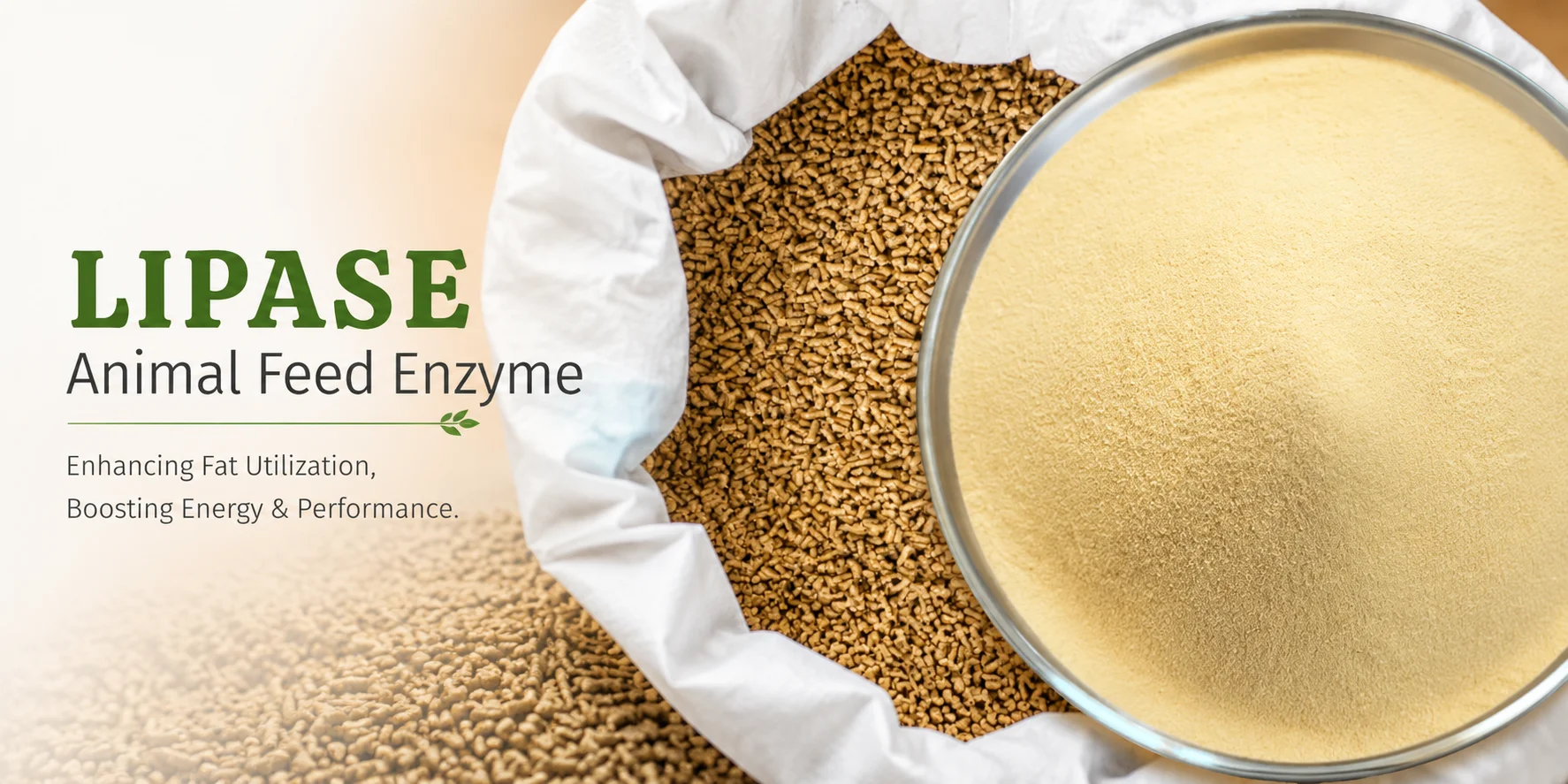
Leaf CleanTech's LEAFLIPE comes as a feed-grade powder. It packs in a 25 kg pack, with an activity level of 5000 u/g and a shelf life of 6 months.
The minimum order quantity is 25 kg.
First, assess the fat content of your feed formulation. Then, calculate dosage based on your target fat digestibility improvement.
Next, incorporate the enzyme evenly during feed mixing, since uneven distribution can lead to inconsistent results. Finally, monitor growth rates and feed efficiency to confirm enzyme performance.
Lipase targets fats specifically. For protein breakdown instead, see our neutral protease feed enzyme or acid protease feed enzyme guides.
If your formulation also includes soy-based ingredients, our alpha galactosidase feed grade page covers that related application.
For our complete feed enzyme range, visit the animal feed enzymes guide.
Leaf CleanTech supplies feed-grade lipase enzyme for industrial applications. Contact us to request a quote.
©2026. Leaf CleanTech - All Rights Reserved.