
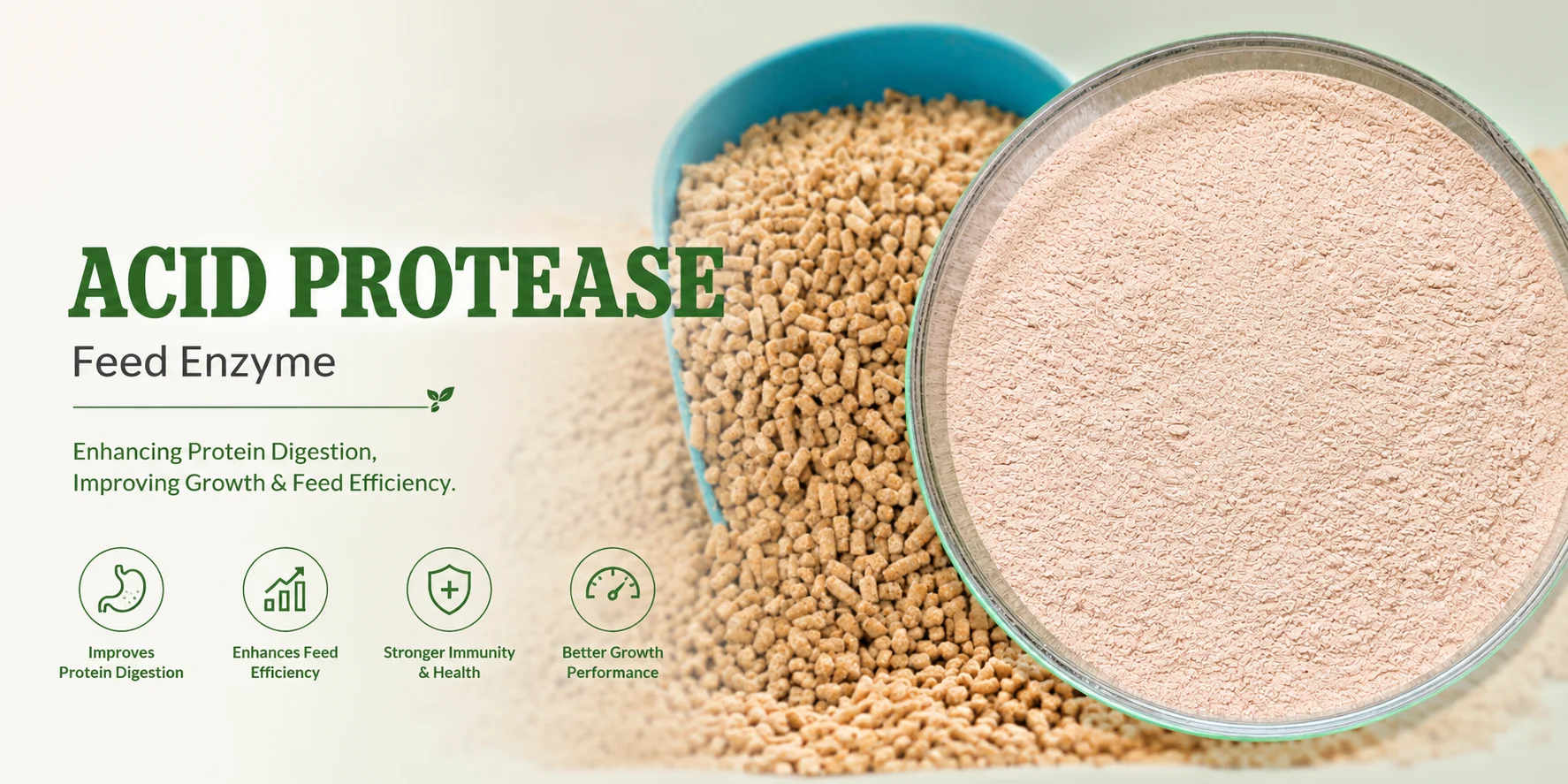
Acid protease feed enzyme helps livestock digest protein more completely, especially during early growth stages. Piglets and chicks cannot always digest protein well on their own. Their stomachs simply don't produce enough natural enzymes yet. So, a lot of good protein goes to waste.
This is where acid protease feed enzyme steps in. It helps young animals break down protein more efficiently. As a result, farmers see better growth, healthier gut function, and lower feed costs.
This guide explains what acid protease is, how it works, and how to use it correctly in your feed formulation.
Acid protease is a proteolytic enzyme. In simple terms, it breaks proteins into smaller, absorbable pieces.
However, it only works well under acidic conditions. This makes it a perfect match for the stomach, where pH levels stay naturally low.
Because of this, acid protease targets protein digestion right where it starts. Consequently, feed ingredients get used more effectively, and less protein passes through undigested.
When feed enters the stomach, acid protease gets to work immediately. It breaks down complex protein chains into smaller peptides and amino acids.
Therefore, the small intestine receives protein that's already partly broken down. This makes absorption faster and easier.
In addition, the enzyme reduces the digestive burden on young animals. Since their bodies aren't yet producing enough protease naturally, this support becomes essential during early growth stages.
Young livestock, especially piglets and chicks, face a common problem. Their digestive systems are still developing.
So, natural enzyme production stays low during the first few weeks of life. Meanwhile, protein requirements for growth remain high.
This gap creates a real risk: undigested protein moving through the gut without being absorbed. Not only does this waste valuable feed, but it can also disturb gut health.
Acid protease closes this gap directly. Consequently, animals absorb more amino acids from the same feed. Overall, this supports stronger, healthier early growth.
Acid protease works directly in the stomach, where digestion begins. As a result, more protein breaks down before reaching the intestine.
Since protein breaks down more completely, nutrient absorption improves too. Therefore, animals extract greater value from every feed batch.
Because digestion becomes more efficient, less feed is needed to achieve the same growth. This directly supports better feed conversion ratios (FCR).
Young animals benefit the most from acid protease. So, it plays a particularly valuable role in starter and pre-starter feed formulations.
Additionally, acid protease eases the digestive load on young animals. This can support gut comfort during a sensitive growth phase.
Acid protease feed enzyme fits naturally into several feed types. For instance, it works well in:
Because plant proteins often digest less easily than animal proteins, acid protease becomes especially useful here. Consequently, formulators can rely more confidently on plant-based ingredients without compromising digestibility.
Leaf CleanTech's acid protease feed enzyme is manufactured as an IP-grade powder, built for consistent industrial use.
| Specification | Details |
|---|---|
| Form | IP-grade powder |
| 3000 u/g | |
| Packaging | 25 kg HDPE drums |
| Shelf Life | 2 years |
| Minimum Order Quantity | 25 kg |
Since the enzyme is IP-grade, it meets consistent quality standards required for industrial feed manufacturing.
Getting the dosage right matters. Here's a simple, step-by-step approach:
Because consistency during mixing directly affects enzyme performance, this step should never be rushed.
Acid protease isn't the only protease option available. So, how does it compare?
Therefore, the right choice depends on your feed's pH profile and formulation goals. For a broader comparison, explore our complete animal feed enzymes guide.
What does acid protease feed enzyme do?
It breaks down dietary protein into smaller, absorbable units, specifically under acidic (low pH) conditions found in the stomach.
Which animals benefit most from acid protease?
Young, growing animals benefit the most, especially piglets and chicks, since their natural enzyme production is still developing.
How is acid protease different from neutral protease?
Acid protease works best at low pH, typically in the stomach. Neutral protease, on the other hand, performs better at neutral pH levels, making it suitable for different feed formulation stages.
What is the shelf life of Leaf CleanTech's acid protease enzyme?
It has a shelf life of 2 years when stored properly, and it's supplied in 25 kg HDPE drums with a minimum order quantity of 25 kg.
Can acid protease be used with plant-based protein sources?
Yes. In fact, it's particularly useful for plant-based proteins, since these often digest less completely than animal-derived proteins.
Leaf CleanTech manufactures feed-grade acid protease enzyme for industrial buyers across the animal nutrition sector. Contact us today to discuss your requirements and request a quote.
©2026. Leaf CleanTech - All Rights Reserved.