
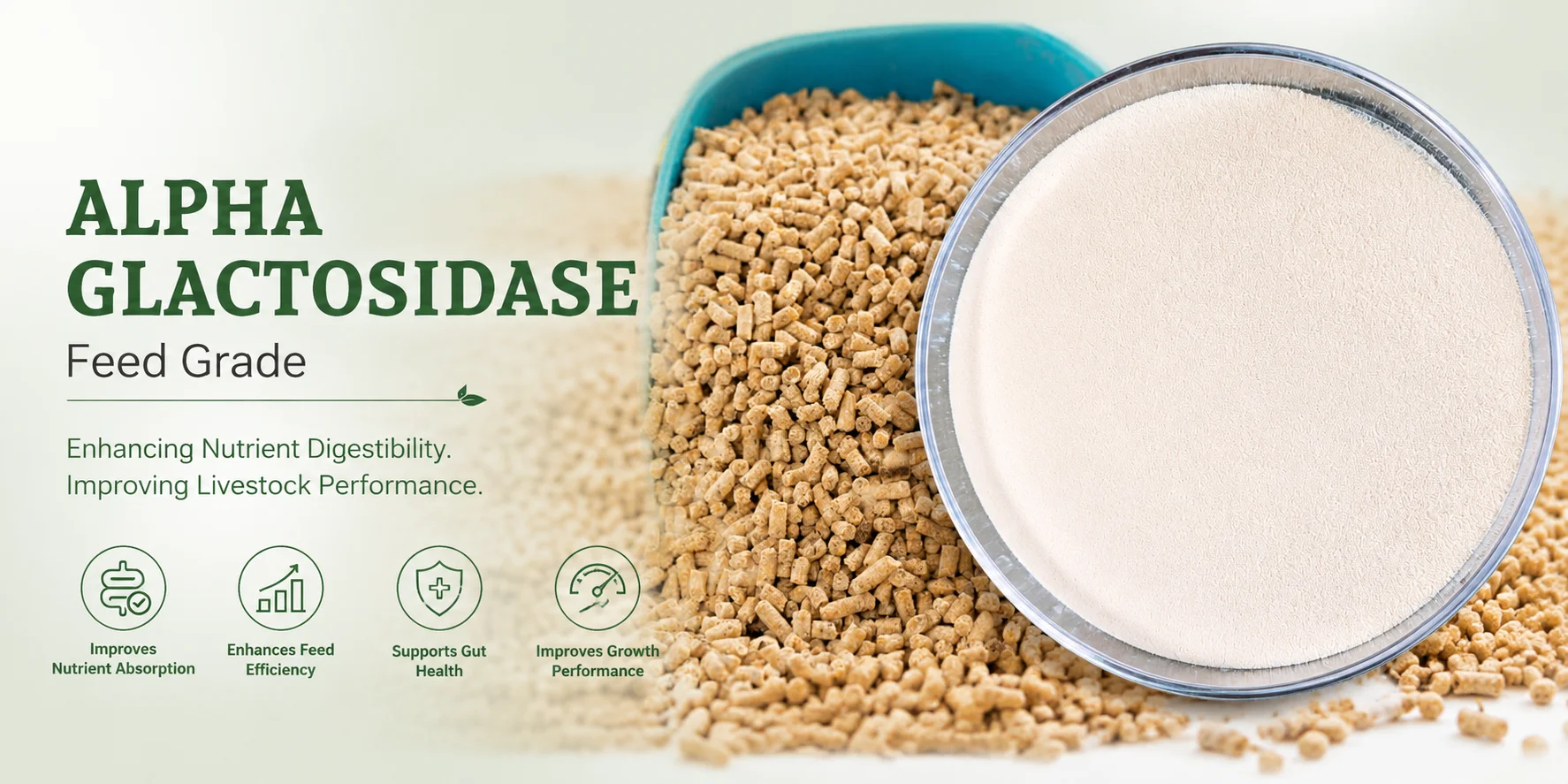
Feed formulation is a balancing act. Producers want affordable ingredients. Yet, they also need strong digestibility. Alpha Galactosidase Feed Grade enzyme helps solve this exact challenge.
It targets specific sugars in plant-based feed. These sugars usually resist normal digestion. So, the enzyme steps in to break them down. As a result, animals get more usable energy from every meal.
This enzyme fits well within a broader enzyme-based animal feed strategy, especially for producers working with soy-heavy diets.
Soybean meal is a go-to protein source. However, it also contains raffinose family oligosaccharides (RFOs). These include raffinose, stachyose, and verbascose.
Unfortunately, monogastric animals can't break these down naturally. Consequently, these sugars pass into the hindgut undigested. There, they ferment. This leads to gas, bloating, and looser stools.
Over time, this reduces feed efficiency. It also limits growth potential. Therefore, many producers turn to targeted enzyme solutions, similar to how protease enzymes address protein digestibility gaps.
Soy-based ingredients remain popular for good reason. They're protein-rich, cost-effective, and widely available.
However, raffinose and stachyose create a real limitation. These sugars often ferment in the gut, and this fermentation can cause bloating, discomfort, and reduced nutrient absorption.
Alpha galactosidase addresses this problem directly. Therefore, formulators can use soy-based ingredients more confidently, without sacrificing digestive comfort or nutrient value.
The process is fairly simple. First, the enzyme locates alpha-1,6-galactosidic bonds within RFOs. Next, it breaks these bonds apart.
Afterward, complex sugars convert into simpler forms, like glucose and galactose. These are easily absorbed in the small intestine. Meanwhile, less material reaches the hindgut. So, fermentation and discomfort drop significantly.
This mechanism works alongside other digestive enzymes too. For instance, when paired with phytase feed grade enzyme, overall nutrient release improves even further.
Because complex sugars break down properly, animals absorb more energy and protein. Thus, overall feed value increases.
Less undigested material means less fermentation. Therefore, bloating and discomfort reduce naturally.
Animals convert feed into growth more efficiently. Consequently, farmers see faster, more consistent results.
Since the enzyme unlocks more value from soybean meal, producers don't need to shift to pricier protein sources. Meanwhile, performance remains strong.
Piglets and chicks have developing digestive systems. However, this enzyme eases the strain during early feeding stages.
In broiler and layer diets, this enzyme improves soy digestibility. As a result, weight gain and egg production often see measurable gains. This pairs well with strategies covered in our poultry feed enzyme guide.
Weaning piglets are especially vulnerable to digestive stress. Nonetheless, Alpha Galactosidase Feed Grade enzyme helps reduce scouring risk and supports steady early growth.
Fish and shrimp feeds increasingly rely on plant proteins. Yet, aquatic species are sensitive to gut irritation. Thus, this enzyme plays a valuable supporting role, much like xylanase feed grade enzyme does for fiber digestion in aquafeed.
Young calves, before full rumen development, can also benefit. Specifically, the enzyme supports easier transitions to solid feed.
Leaf CleanTech's LEAFALPHAGAL AP comes as a feed-grade powder, built for consistent performance across formulations.
| Specification | Details |
|---|---|
| Form | Feed-grade powder |
| HDPE | drums: |
| Shelf Life: | 6 months |
| Minimum Order Quantity : | 25 kg |
Because shelf life is shorter than some other feed enzymes, timely stock rotation matters here.
Leaf CleanTech manufactures this enzyme under strict quality control. Every batch undergoes lab verification for activity and consistency.
Here's what makes it reliable:
Because of this consistency, feed manufacturers across poultry, swine, and aquaculture trust this enzyme for dependable outcomes.
What is Alpha Galactosidase Feed Grade enzyme used for?
It breaks down complex sugars in soybean meal, improving digestion and nutrient absorption in livestock and aquafeed.
Does this enzyme reduce bloating in animals?
Yes. It reduces undigested sugar fermentation in the hindgut, which lowers gas and digestive discomfort.
Which animals benefit most from this enzyme?
Poultry, swine, and aquaculture species benefit most, since they naturally lack enzymes to digest RFOs.
Can this enzyme improve overall feed efficiency?
Yes. Since animals absorb more nutrients per feeding, feed conversion ratios typically improve.
Is this enzyme safe for young or weaning animals?
Yes. In fact, it's particularly useful for piglets and chicks, since their digestive systems are still maturing.
Leaf CleanTech manufactures feed-grade alpha galactosidase enzyme for industrial buyers across the animal nutrition sector. Contact us today to request a quote.
©2026. Leaf CleanTech - All Rights Reserved.
Food Enzymes - Leaf CleanTech
July 4, 2026[…] Related product:[Alpha Galactosidase Enzyme] […]