
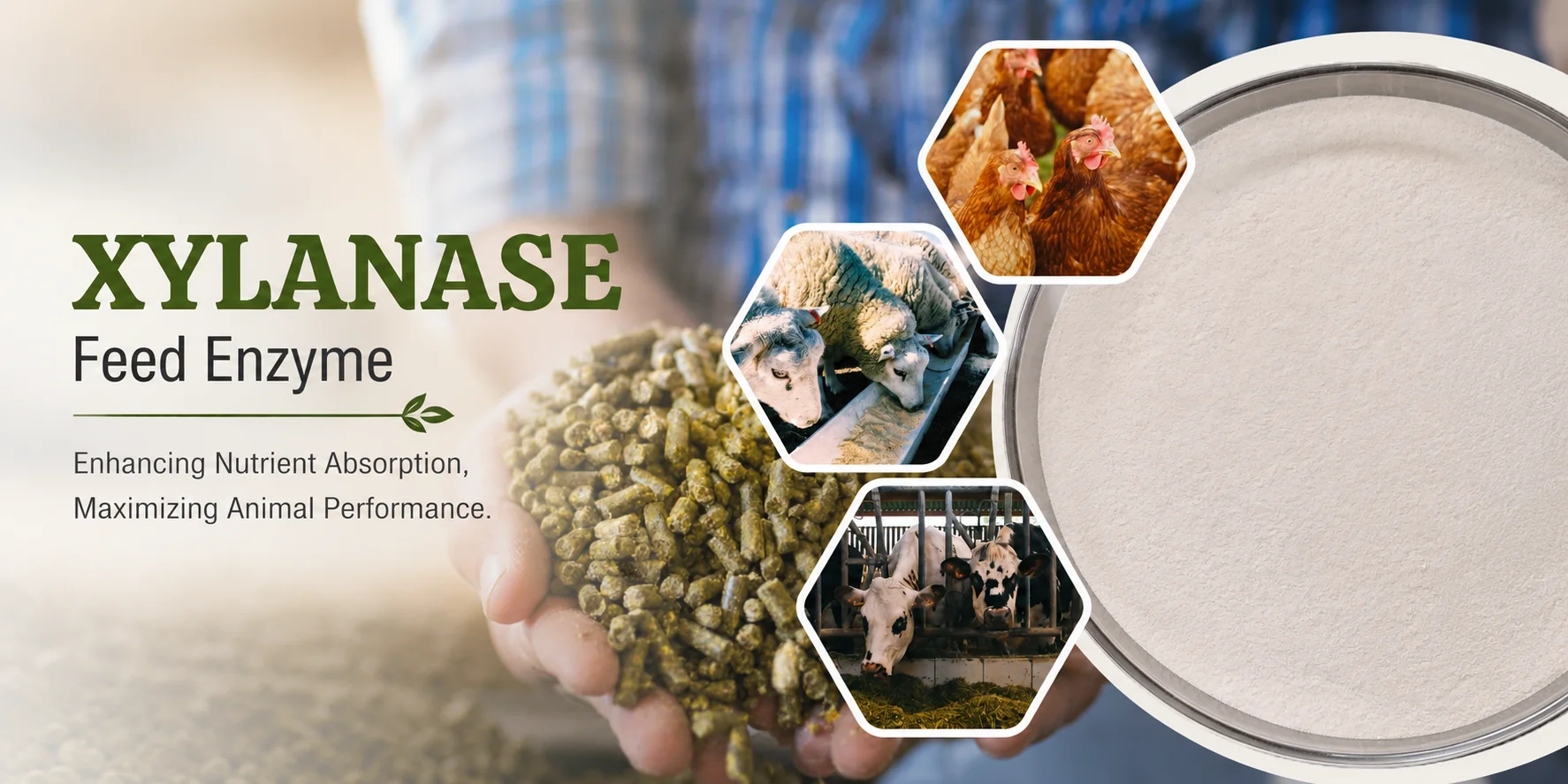
Animal feed manufacturers continually look for ways to improve feed digestibility, nutrient utilization and production efficiency. However, plant-based feed ingredients contain complex fibres that can limit nutrient availability. This is where xylanase feed enzyme can help.
Xylanase targets xylan, a major component of hemicellulose found in plant cell walls. By breaking down these complex structures, it can support more effective feed utilization under suitable formulation and processing conditions. Therefore, xylanase has an important role in modern animal nutrition, particularly in diets containing cereal grains and other plant-derived ingredients.
Leaf CleanTech offers LEAFXYL AP Xylanase as part of its animal feed enzyme portfolio. Feed manufacturers can explore this solution to determine whether it fits their raw materials, animal species and production objectives.
What Is Xylanase Feed Enzyme?
Xylanase is an enzyme that catalyses the breakdown of xylan, a polysaccharide found in hemicellulose. Hemicellulose forms part of the structural material in plant cell walls. Consequently, xylan-containing fibres are present in many common feed ingredients, including wheat, rye, bran and other cereal-based materials.
Animals cannot always fully utilise these complex plant structures. Moreover, certain cereal fibres may increase digesta viscosity or restrict access to other nutrients, depending on the ingredient and animal species. Adding an appropriate xylanase preparation can help break down targeted fibre components and support better feed utilisation.
However, xylanase does not work identically in every feed. Its performance depends on factors such as the type of xylan present, enzyme activity, pH, temperature, processing conditions and the animal's digestive environment.
How Does Xylanase Work in Animal Feed?
Xylanase acts on the xylan structure within plant-derived feed ingredients. Through enzymatic hydrolysis, it breaks bonds in the xylan backbone and produces smaller carbohydrate fragments. As a result, the structure of the plant fibre changes, potentially making other nutrients more accessible.
1. Targets Plant Fibre
Xylanase acts on xylan-containing hemicellulose in suitable feed ingredients. This helps address specific fibre-related challenges in feed formulations.
2. Breaks Down Xylan
The enzyme hydrolyses xylan into smaller fragments. Consequently, the original fibre structure becomes less complex.
3. Supports Nutrient Access
Breaking down selected plant-cell-wall components can help improve access to nutrients trapped within or associated with the fibre matrix.
4. Supports Feed Efficiency
When correctly selected and applied, xylanase can contribute to more efficient nutrient utilization and feed formulation.
For this reason, feed manufacturers should evaluate xylanase alongside the overall feed composition rather than treating it as a universal solution. The right enzyme activity and inclusion rate are essential for consistent results.
Key Benefits of Xylanase for Animal Feed
1. Helps Improve Fibre Digestibility
Plant-based feed ingredients contain structural carbohydrates that animals may not fully digest. Xylanase targets part of this fibre fraction. Therefore, it can help improve the utilisation of suitable cereal-based feed materials.
2. Supports Nutrient Utilization
Some nutrients remain less accessible when they are enclosed within complex plant structures. By breaking down targeted xylan components, xylanase may help release these nutrients for further digestion. The actual benefit depends on the feed ingredients and animal species.
3. Helps Manage Fibre-Related Feed Challenges
Certain cereal ingredients contain arabinoxylans that can influence digesta viscosity, particularly in poultry diets. An appropriate xylanase preparation may help reduce these fibre-related effects. However, the result depends on the substrate and the specific enzyme characteristics.
4. Supports Feed Formulation Flexibility
Feed manufacturers often balance ingredient cost, nutrient density and animal performance. Xylanase can provide another formulation tool when diets contain suitable xylan-rich ingredients. Consequently, nutritionists can evaluate its inclusion as part of a broader feed optimisation strategy.
5. Complements Other Feed Enzymes
Xylanase targets xylan, whereas other enzymes act on different substrates. Therefore, combining compatible enzyme activities may address several feed challenges at once. Each combination should be assessed for compatibility, stability and suitability for the intended feed.
Applications of Xylanase Feed Enzyme
Xylanase can support several animal feed applications, particularly where plant cell-wall components affect nutrient availability. The following examples illustrate common areas for evaluation.
Poultry Feed
Poultry diets often use cereal grains and plant-derived ingredients. In suitable formulations, xylanase can help break down arabinoxylans and support nutrient utilisation. Feed manufacturers should consider grain type, fibre composition, bird age and processing conditions when selecting the enzyme.
Swine Feed
Pig diets may include wheat, bran and other plant materials containing arabinoxylans. Depending on the formulation, xylanase can help target these structural carbohydrates and support feed digestibility. The response varies with the ingredients and the animal's digestive capacity.
Livestock Feed
Livestock feed formulations can include a wide range of fibrous plant materials. Xylanase may be considered when xylan-containing ingredients create a specific digestibility challenge. Nevertheless, the appropriate enzyme strategy depends on the species, diet composition and intended production outcome.
Compound Feed Manufacturing
Compound feed producers can evaluate xylanase as part of an enzyme-based formulation strategy. Before implementation, they should review mixing uniformity, pelleting temperatures, storage conditions and the enzyme's recommended application method.
Xylanase vs. Other Animal Feed Enzymes
Different feed enzymes target different substrates. Understanding these differences helps manufacturers choose a suitable enzyme or combination for their formulation.
| Enzyme | Primary Target | Potential Role in Feed |
|---|---|---|
| Xylanase | Xylan in hemicellulose | Supports the breakdown of selected plant fibres and nutrient accessibility. |
| Cellulase | Cellulose | Targets cellulose-based plant cell-wall material. |
| Beta-glucanase | Beta-glucans | Helps break down beta-glucans in suitable feed ingredients. |
| Neutral protease | Proteins | Hydrolyses proteins into smaller peptides and amino acids. |
| Alpha galactosidase | Selected alpha-galactoside sugars | Targets specific complex sugars in ingredients such as soybean meal. |
| Phytase | Phytate | Helps release phytate-bound phosphorus under suitable conditions. |
As the table shows, each enzyme performs a distinct function. Therefore, xylanase should be selected for xylan-related challenges, while complementary enzymes may be useful when the feed contains other target substrates.
Factors to Consider When Selecting Xylanase
Choosing a suitable xylanase requires more than comparing enzyme products. Instead, manufacturers should evaluate the entire feed formulation and the conditions under which the enzyme will work.
- Feed ingredients: Identify the cereal grains, bran and other plant materials that contribute xylan or arabinoxylans.
- Animal species: Consider the species, age and nutritional requirements of the animals receiving the feed.
- Enzyme activity: Compare declared activity units and test methods rather than relying on product weight alone.
- Operating conditions: Check pH, temperature, moisture and processing time against the enzyme's recommended working range.
- Feed processing: Review whether the enzyme will be added before or after pelleting and confirm its stability under the intended process.
- Dosage and validation: Follow supplier guidance and evaluate performance through suitable feed analysis and animal-performance measures.
In addition, manufacturers should request the technical data sheet, recommended dosage, activity definition, storage conditions and applicable quality documents before commercial use.
How to Incorporate Xylanase into Feed Formulations
Correct application helps maintain enzyme activity and achieve consistent distribution throughout the feed. Although the exact procedure varies by product, the following steps provide a practical starting point.
- Assess the feed: Review the raw materials and identify whether xylan-containing fibres create a formulation challenge.
- Confirm product suitability: Check the enzyme activity, recommended dosage and working conditions with the supplier.
- Choose the application method: Determine whether the enzyme should be added during feed mixing, through a premix or at another validated stage of production.
- Ensure uniform mixing: Follow the recommended mixing procedure to help distribute the enzyme evenly.
- Protect enzyme activity: Evaluate pelleting temperature, moisture, storage and other conditions that could affect performance.
- Monitor results: Compare suitable digestibility, feed conversion and production indicators against the established baseline.
Do not apply a universal dosage across all feeds. Instead, use the supplier's technical recommendations and validate the application under the intended manufacturing conditions.
LEAFXYL AP Xylanase from Leaf CleanTech
Leaf CleanTech provides enzyme solutions for the animal feed industry, including LEAFXYL AP Xylanase. The product can be evaluated by feed manufacturers seeking an enzyme that targets xylan-containing plant materials.
Leaf CleanTech develops industrial enzyme solutions for food and nutrition, animal feed and fermentation applications. Its approach combines enzyme formulation expertise with application-focused technical support.
Before selecting LEAFXYL AP for a production line, discuss your feed ingredients, target animal species, processing conditions and expected outcomes with the technical team.
Product Information to Confirm
| Specification | Details |
|---|---|
| Product name | LEAFXYL AP Xylanase |
| Application | Animal feed formulations |
| Product form | Confirm with Leaf CleanTech |
| Enzyme activity | Request the current technical data sheet |
| Recommended dosage | Confirm according to the feed and application |
| Packaging and MOQ | Confirm current commercial specifications |
| Shelf life and storage | Follow the current product label and supplier guidance |
Product specifications can vary by formulation and commercial requirements. Contact Leaf CleanTech to obtain the latest product data, availability and application recommendations.
Why Choose Leaf CleanTech for Feed Enzymes?
Application-Focused Enzyme Solutions
Leaf CleanTech develops enzyme solutions for industrial applications, including animal feed. This application-led approach helps manufacturers evaluate enzyme options according to their specific processing needs.
Broad Feed Enzyme Portfolio
Its animal feed portfolio includes xylanase, cellulase, beta-glucanase, protease, phytase, mannanase and amylase solutions. As a result, manufacturers can explore complementary enzyme activities for different feed ingredients.
Customized Formulation Support
Different feed materials require different enzyme strategies. Leaf CleanTech offers customized enzyme formulation capabilities, subject to technical evaluation and application requirements.
Technical Guidance
Enzyme performance depends on the raw material, processing conditions and target reaction. Discussing these factors with the supplier helps identify a more suitable enzyme and application approach.
Frequently Asked Questions About Xylanase Feed Enzyme
1. What is xylanase feed enzyme used for?
Xylanase feed enzyme breaks down xylan, a component of plant hemicellulose. In suitable feed formulations, it can support fibre breakdown, nutrient accessibility and feed utilisation.
2. How does xylanase improve animal feed digestibility?
Xylanase hydrolyses parts of the xylan structure in plant cell walls. Consequently, it can help make certain nutrients more accessible. The outcome depends on the feed ingredients, enzyme characteristics and animal species.
3. Which animals can benefit from xylanase feed enzyme?
Xylanase is commonly evaluated in poultry and swine diets, as well as selected other livestock formulations. Suitability depends on the animal's diet, the fibre composition and the enzyme's activity profile.
4. Which feed ingredients contain xylan?
Xylan-containing components occur in many plant-based ingredients, including wheat, rye, bran and other cereal materials. The concentration and structure vary by ingredient and processing method.
5. What is the difference between xylanase and cellulase?
Xylanase targets xylan, which is part of hemicellulose, whereas cellulase targets cellulose. Both enzymes act on plant cell-wall components, but they perform different functions.
6. Can xylanase be combined with other feed enzymes?
Yes, compatible enzyme combinations may address different substrates in the same feed. However, manufacturers should verify compatibility, activity, stability and dosage with the supplier before combining products.
7. How do I determine the correct xylanase dosage?
Dosage depends on enzyme activity, feed composition, animal species and processing conditions. Follow the manufacturer's technical guidance and validate the inclusion rate for the intended application.
8. Does xylanase remain active during feed pelleting?
Enzyme stability during pelleting depends on the formulation and the temperature, moisture and processing conditions. Check the product's thermal-stability information and confirm the appropriate application method.
9. What is LEAFXYL AP Xylanase?
LEAFXYL AP is Leaf CleanTech's xylanase product listed in its animal feed portfolio. Contact the company for current activity specifications, dosage, packaging and technical documentation.
10. Where can I source xylanase feed enzyme in India?
You can contact Leaf CleanTech in Bengaluru to enquire about LEAFXYL AP Xylanase, product availability, technical specifications and suitability for your animal feed formulation.
Explore Related Feed Enzyme Resources
Learn more about complementary enzyme solutions and their roles in animal nutrition:
- Animal Feed Enzymes – Explore Leaf CleanTech's animal feed enzyme portfolio.
- Feed Cellulase Enzyme – Understand cellulase applications in feed formulations.
- Feed Beta-Glucanase – Learn about enzymes that target beta-glucans.
- Neutral Protease Feed Enzyme – Explore protein hydrolysis in animal feed.
- Alpha Galactosidase Feed Enzyme – Discover its role in breaking down selected complex sugars.
- Industrial Biotechnology Applications – Understand how enzymes support industrial processing.
Find the Right Xylanase Solution
Looking for a xylanase enzyme for your animal feed formulation? Connect with Leaf CleanTech to discuss your feed ingredients, application requirements, technical specifications and product availability.
Contact Leaf CleanTech
Phytase Enzyme Benefits in Animal Feed & Nutrient Absorption - Leaf CleanTech
July 25, 2026[…] Xylanase targets certain non-starch polysaccharides. […]