
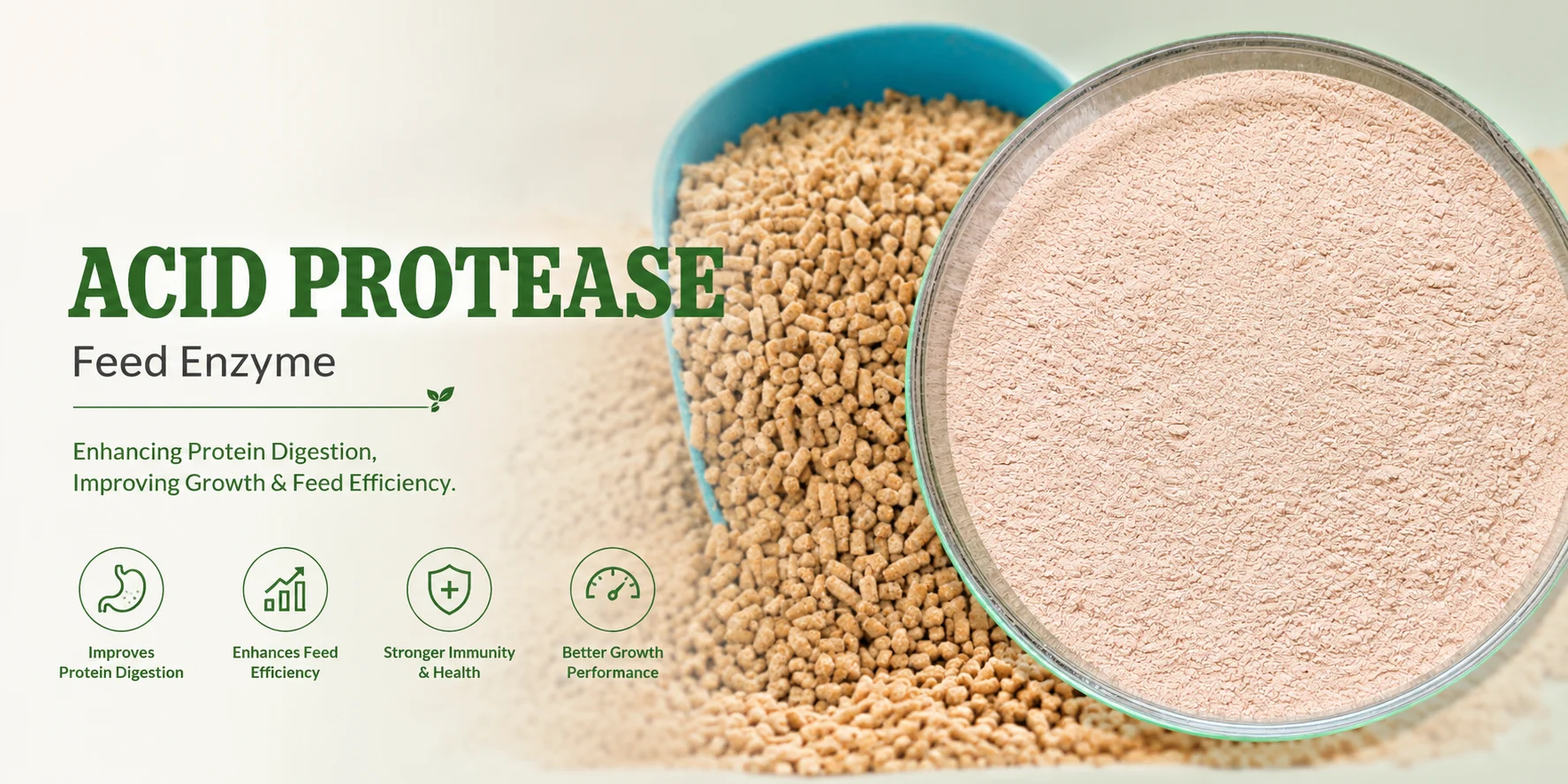
Protein is essential for animal growth, muscle development and overall performance. However, animals must break dietary protein into smaller peptides and amino acids before they can absorb and use it. Therefore, feed manufacturers continually explore ways to improve protein utilisation while maintaining cost-effective formulations.
An acid protease feed enzyme helps break down proteins under suitable acidic conditions. This makes it relevant to feed formulations where protein digestion in an acidic environment is a priority. Leaf CleanTech offers LEAFAPROT AP for animal feed applications. You can also explore the complete animal feed enzyme range to compare complementary enzyme solutions.
What Is Acid Protease Feed Enzyme?
Acid protease is a proteolytic enzyme that breaks peptide bonds within proteins. This reaction converts larger protein molecules into smaller peptides and other hydrolysis products.
Acid protease differs from proteases designed to work best around neutral pH. Its activity under acidic conditions makes it relevant to the stomach stage of digestion. However, the exact pH range and performance depend on the specific enzyme formulation.
In animal feed, acid protease may complement the animal's natural digestive enzymes. Its practical value depends on feed ingredients, enzyme activity, dosage, animal species and digestive conditions.
For a comparison of proteases with different activity profiles, explore Leaf CleanTech's neutral protease feed enzyme.
How Does Acid Protease Work?
Dietary proteins contain chains of amino acids joined by peptide bonds. Acid protease catalyses the breakdown of these bonds under suitable acidic conditions. As a result, it produces smaller peptides that digestive enzymes can process further.
- Feed enters the stomach: The acidic environment provides conditions in which a suitable acid protease can function.
- Protein hydrolysis begins: The enzyme breaks selected peptide bonds within dietary proteins, producing smaller peptides.
- Digestion continues: Other digestive enzymes process these products further into absorbable amino acids and smaller peptides.
- Nutrients become available for absorption: The animal's digestive system processes the resulting nutrients. The overall benefit depends on the complete diet and enzyme performance.
Key Benefits of Acid Protease Feed Enzyme
1. Supports Protein Breakdown
Acid protease helps hydrolyse dietary proteins into smaller peptides. This action can complement natural protein digestion in suitable animal feed formulations.
2. Works Under Acidic Conditions
Its activity under low-pH conditions makes acid protease an option when formulators want to target protein digestion in an acidic environment.
3. Supports Protein Utilisation
When the enzyme matches the feed and digestive conditions, improved protein hydrolysis may support dietary protein utilisation.
4. Fits High-Protein Diets
Nutritionists may evaluate acid protease in diets containing substantial quantities of plant or other protein ingredients.
5. Complements Other Proteases
Acid protease may complement neutral protease when both enzymes have suitable activity profiles across the intended application conditions.
6. Supports Feed Formulation Research
Manufacturers can assess acid protease as part of a targeted strategy to improve nutrient utilisation and optimise feed formulations.
Benefits vary with enzyme characteristics, inclusion rate, diet composition, animal species and management conditions. Validate performance before making commercial claims.
Applications of Acid Protease in Animal Nutrition
1. Poultry Feed
Poultry diets often contain protein-rich ingredients such as soybean meal. Acid protease may help hydrolyse dietary proteins under suitable acidic conditions, supporting the overall protein digestion process.
Feed manufacturers can evaluate its use in broiler and other poultry diets by considering bird age, protein sources, processing conditions and the target nutritional outcome. You can also explore feed beta glucanase when cereal beta-glucans are a separate formulation concern.
2. Piglet and Swine Feed
Piglets experience substantial dietary changes around weaning. During this period, feed intake, ingredient selection and digestive adaptation can influence nutrient utilisation. Acid protease may be considered where protein hydrolysis is a priority.
Its suitability depends on the complete diet and the enzyme's activity profile. Nutritionists should assess performance using appropriate feeding trials rather than assuming the same response across every formulation.
3. Plant-Protein-Based Diets
Soybean meal and other plant-derived ingredients supply protein in many commercial feeds. Their nutritional value depends on ingredient quality, processing and the animal's ability to digest the proteins they contain.
Acid protease can be evaluated as a supplementary tool for protein hydrolysis. Meanwhile, ingredient quality, anti-nutritional factors and amino acid balance remain important considerations.
4. High-Protein Feed Formulations
Some feed formulations rely on several protein sources to meet nutritional targets. In these cases, manufacturers may assess acid protease to determine whether additional protein hydrolysis offers a measurable advantage.
For other feed ingredient challenges, compare it with feed cellulase enzyme and xylanase feed enzyme, which target different plant-fibre components rather than protein.
Acid Protease vs Neutral Protease vs Papain
Acid protease, neutral protease and papain all break down proteins, but their activity profiles and sources differ. Selecting the appropriate enzyme requires an understanding of the application conditions and the desired result.
| Enzyme | Primary Function | Key Characteristic | When to Evaluate It |
|---|---|---|---|
| Acid Protease | Breaks proteins into smaller peptides | Functions under suitable acidic conditions | When protein hydrolysis under low-pH conditions is a priority |
| Neutral Protease | Hydrolyses dietary proteins | Designed for activity around neutral pH, depending on the product | When neutral-pH protein hydrolysis is required |
| Papain Feed Enzyme | Hydrolyses peptide bonds in proteins | Plant-derived protease obtained from papaya latex | When its activity profile and source suit the application |
| Cellulase | Breaks down cellulose | Targets plant cell-wall fibre rather than protein | When cellulose degradation is a formulation objective |
| Beta Glucanase | Breaks down specific beta-glucans | Targets selected carbohydrate structures | When cereal beta-glucans are relevant to the feed |
Acid protease and neutral protease may serve complementary roles when their activity ranges suit the intended application. However, combining enzymes does not always produce a better result. Check compatibility, activity units, dosage recommendations and the formulation's pH profile before using an enzyme blend.
Product Specifications: LEAFAPROT AP
Leaf CleanTech lists LEAFAPROT AP as its acid protease feed enzyme. Review the current technical datasheet with the supplier to confirm activity, product grade, packaging and storage requirements before ordering.
| Specification | Product Details |
|---|---|
| Product Name | Acid Protease Feed Enzyme |
| Product Code | LEAFAPROT AP |
| Enzyme Type | Acid protease |
| Published Activity | 3,000 U/g |
| Product Form | Confirm current feed-grade form with Leaf CleanTech |
| Packaging | Confirm current pack type and size with the supplier |
| Shelf Life | Confirm from the current product label or technical datasheet |
| Minimum Order Quantity | Confirm current commercial terms with Leaf CleanTech |
Confirm the activity assay and units, feed-use suitability, recommended inclusion rate, storage conditions and current packaging with Leaf CleanTech. Ensure the product's stated grade meets local feed regulations and your intended application.
How to Select Acid Protease for Feed Formulation
Choosing an acid protease requires more than checking the product name. The enzyme must match the protein sources, processing conditions and nutritional goals of the formulation.
- Review the protein ingredients: Identify the main protein sources and assess their quality, digestibility and contribution to the finished feed.
- Define your objective: Decide whether you want to assess protein hydrolysis, nutrient utilisation or another measurable nutritional outcome.
- Check enzyme activity: Review the activity units, assay method and supplier's recommended inclusion rate. Activity values are comparable only when measured using compatible methods.
- Consider operating conditions: Evaluate pH, temperature, moisture, feed processing and storage because these factors can affect enzyme performance.
- Validate the results: Compare an enzyme-supplemented diet with a suitable control and monitor relevant indicators before wider implementation.
Best Practices for Using Acid Protease Feed Enzyme
- Follow technical guidance: Use the supplier's current recommended inclusion rate rather than estimating dosage from another protease product.
- Maintain uniform mixing: Ensure that the enzyme distributes evenly throughout the feed batch.
- Check heat stability: If the feed undergoes pelleting or heat treatment, confirm whether the enzyme retains adequate activity under those conditions.
- Store the product correctly: Follow the label's temperature, humidity and handling requirements to maintain product quality.
- Track meaningful indicators: Evaluate digestibility, growth performance, feed intake and feed conversion where appropriate to the species and trial design.
- Review the economics: Compare measurable nutritional benefits with enzyme cost and any changes to the overall feed formulation.
Explore More Feed Enzyme Solutions
Acid protease focuses on protein hydrolysis. Other enzymes target different feed components, so a suitable enzyme programme starts with the ingredients and the formulation challenge.
Neutral Protease
Compare another protease option for protein hydrolysis under suitable neutral-pH conditions. Explore neutral protease.
Feed Cellulase
Learn about an enzyme that targets cellulose in plant materials. Explore feed cellulase.
Feed Beta Glucanase
Discover an enzyme that breaks down selected beta-glucan structures in cereal-based feeds. Explore beta glucanase.
Xylanase Feed Enzyme
Find out how xylanase targets xylan and related hemicellulose components in plant-based feed ingredients. Explore xylanase.
Visit the complete animal feed enzyme portfolio to explore additional products and customised enzyme formulations.
Why Choose Leaf CleanTech for Feed Enzymes?
Leaf CleanTech develops enzyme solutions for industrial applications, including animal nutrition. Its feed portfolio includes proteases, carbohydrases and other enzyme options for different formulation requirements.
Application-Focused Solutions
Explore enzyme options based on raw materials, process conditions and the objectives of your feed formulation.
Multiple Feed Enzymes
Compare proteases with enzymes that target starch, phytate and plant-fibre components.
Product Specification Guidance
Request information on activity units, product form, storage, packaging and recommended application conditions.
Technical Enquiries
Discuss your formulation requirements with the team to identify suitable enzyme options for further evaluation.
Frequently Asked Questions
1. What is acid protease feed enzyme?
Acid protease is a protein-digesting enzyme that hydrolyses peptide bonds under suitable acidic conditions. In animal nutrition, it may complement natural protein digestion when the enzyme suits the feed and digestive environment.
2. What does acid protease do in animal feed?
It breaks larger dietary proteins into smaller peptides. This can support protein hydrolysis and nutrient utilisation in suitable formulations, depending on the enzyme and application conditions.
3. Which animals can benefit from acid protease?
Feed manufacturers may evaluate acid protease in poultry, swine and other suitable animal diets. The right application depends on species, feed composition, enzyme activity and the intended nutritional outcome.
4. Why is acid protease different from neutral protease?
The main difference is their pH activity profile. Acid protease is designed to function under acidic conditions, while neutral protease is selected for activity around neutral pH. Actual operating ranges depend on the specific product.
5. Can acid protease be used with plant-based proteins?
It may be evaluated in formulations containing soybean meal and other plant-derived proteins. Results depend on the ingredient, enzyme characteristics, processing and overall diet composition.
6. Can acid protease improve feed conversion ratio?
It may support better nutrient utilisation in suitable formulations, but improved feed conversion is not guaranteed. A properly designed feeding trial is needed to assess the effect.
7. Can acid protease be combined with neutral protease?
The two enzymes may complement each other if their activity profiles, dosage and application conditions are compatible. Confirm the recommended combination with the supplier before use.
8. What is the enzyme activity of LEAFAPROT AP?
Published product information lists an activity of 3,000 U/g. Confirm the current specification and activity assay with Leaf CleanTech before comparing it with other products.
9. How do I choose the right acid protease dosage?
Base the dosage on the supplier's technical recommendation, enzyme activity, feed ingredients, animal species and processing conditions. Avoid transferring dosage recommendations from another enzyme product.
10. Where can I enquire about acid protease feed enzyme?
Contact Leaf CleanTech to request current product specifications, packaging details and application guidance. You can also explore the animal feed enzyme portfolio for related products.
Find the Right Feed Protease
Looking for an acid protease feed enzyme for your animal nutrition formulation? Contact Leaf CleanTech to discuss LEAFAPROT AP, confirm current product specifications and request application guidance for your feed manufacturing requirements.
Contact Leaf CleanTech
Lipase Animal Feed Enzyme: Uses & Benefits - Leaf CleanTech
September 12, 2026[…] the same time, other enzymes may address different formulation needs. For example, acid protease and neutral protease target proteins rather than […]