
Before yeast can ferment a single gram of sugar, starch has to be broken down into something fermentable.
That first cut happens during liquefaction, and it's driven almost entirely by one enzyme: high-temperature bacterial alpha amylase. Get this stage wrong and every later stage inherits the shortfall — no amount of glucoamylase or yeast optimization downstream can fully make up for starch that never liquefied properly.
Alpha amylase is an endo-enzyme, meaning it attacks starch chains from the inside rather than clipping units off the end. Specifically, it hydrolyzes alpha-1,4 glycosidic linkages within gelatinized starch, cutting long chains into much shorter dextrins and oligosaccharides. The practical effect is a sharp drop in mash viscosity — a thick, gelatinized starch slurry becomes thin and pumpable within minutes of enzyme addition, which is why liquefaction is sometimes referred to informally as the "thinning" stage.
Why it matters downstream: glucoamylase, the enzyme responsible for the next stage (saccharification), works far more efficiently on the short dextrin chains alpha amylase produces than it would on intact starch. Liquefaction isn't just viscosity reduction — it's substrate preparation.
Starch gelatinization — the swelling and structural opening of starch granules that makes them accessible to enzymes — happens at elevated temperatures, and liquefaction is typically run hot to keep the process moving quickly. This is where enzyme choice becomes critical. An alpha amylase that loses activity as temperatures climb will stop converting starch partway through the batch, leaving a portion of the starch charge under-liquefied.
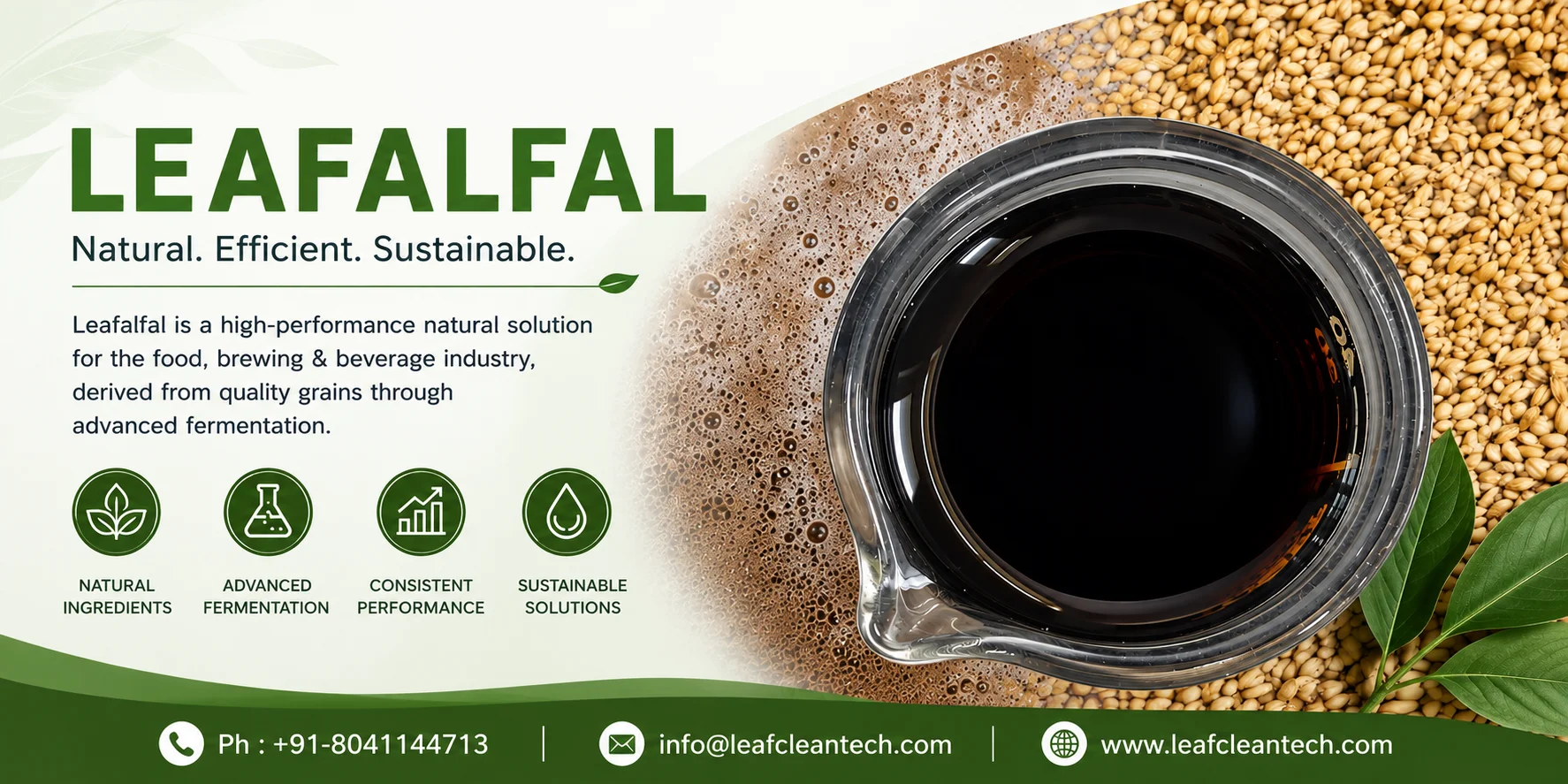
LEAFALFA L, Leaf CleanTech's high-temperature bacterial alpha amylase, is formulated specifically to remain active across the temperature range grain liquefaction typically runs at, so conversion continues through the full heating profile rather than tapering off early.
Three enzyme categories cover almost all grain fermentation applications, each doing a distinct job in the sequence above.
| Stage | What Happens |
|---|---|
| Milling & Slurry Prep | Grain is milled and mixed with water into a starch slurry. |
| Liquefaction (Alpha Amylase) | Starch gelatinizes under heat; alpha amylase cuts it into dextrins and oligosaccharides, reducing viscosity. |
| Saccharification (Glucoamylase) | Dextrins are broken further into fermentable glucose. |
| Fermentation (Yeast + Booster Enzyme) | Yeast converts glucose to ethanol; booster enzyme recovers un-fermentable sugars. |
In most cases, these symptoms trace back to enzyme thermo-stability rather than dosing quantity — meaning the fix is a formulation change, not simply adding more enzyme.
| Form | Liquid |
|---|---|
| Packaging | 25 kg HDPE drums |
| Application | Brewing industry, grain fermentation liquefaction |
| Purity | IP Purity |
| Minimum Order Quantity | 25 kg |
Full specifications and quote requests are available on the Fermentation Products page.
It hydrolyzes alpha-1,4 glycosidic linkages in gelatinized starch, rapidly reducing viscosity and breaking starch into dextrins and oligosaccharides during liquefaction.
Liquefaction runs hot. An enzyme that denatures too early stops converting starch before the batch is fully liquefied, reducing substrate available for saccharification.
The liquefied mash is cooled and treated with glucoamylase, which breaks the remaining dextrins into fermentable glucose for yeast to convert into alcohol.
©2026. Leaf CleanTech - All Rights Reserved.
Industrial Biotechnology Applications - Leaf CleanTech
August 3, 2026[…] Alpha-amylase hydrolyzes starch and reduces its molecular complexity, supporting the liquefaction stage. […]