
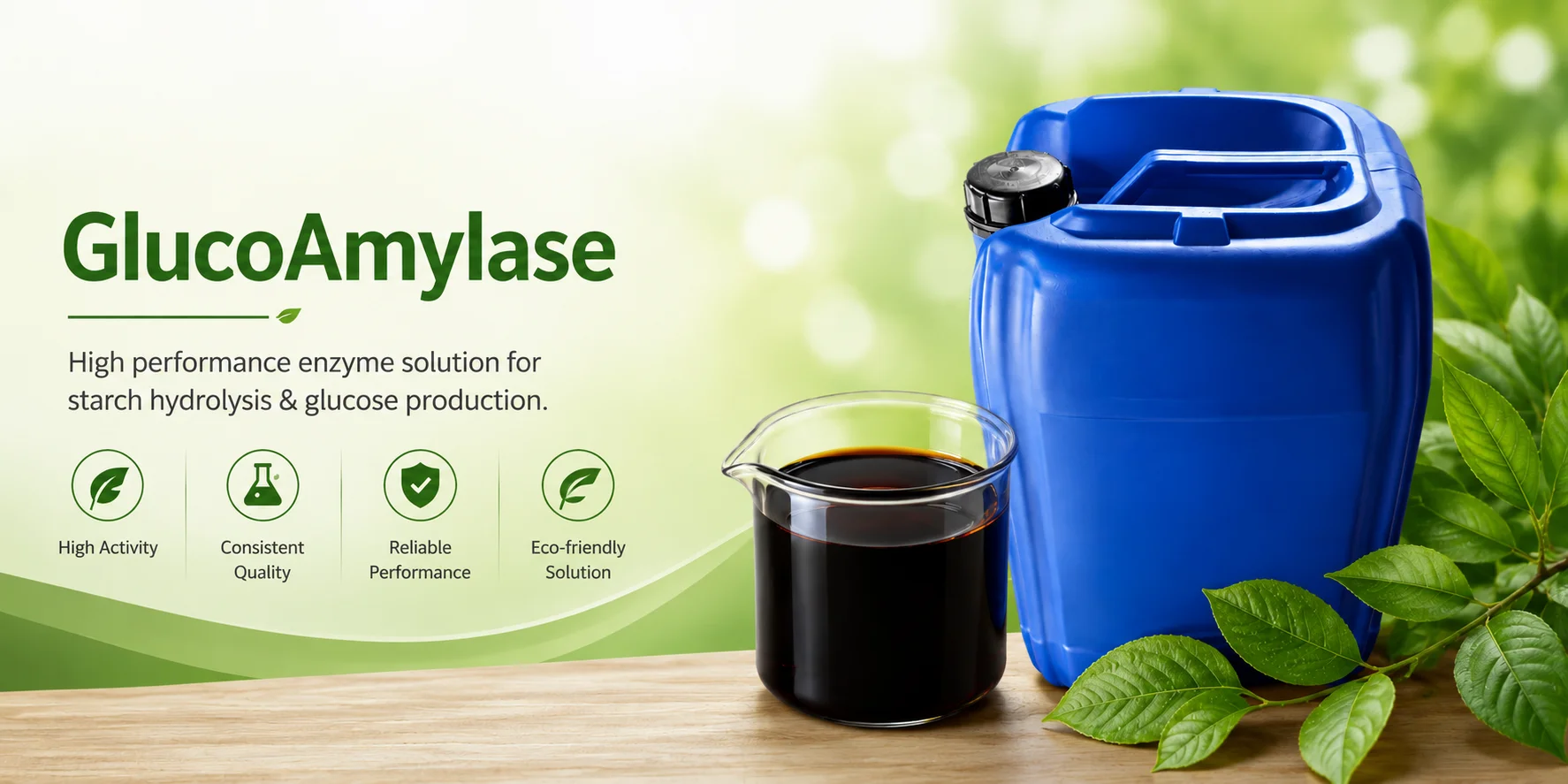
Once alpha amylase has liquefied starch into shorter dextrin chains, that mash still isn't ready for yeast. Yeast can only ferment simple sugars, and dextrins, while shorter than intact starch, are still too complex to be fermented directly. That final conversion — dextrins to glucose — is glucoamylase's job, and it's arguably the stage where the most fermentable sugar is won or lost.
Glucoamylase is an exo-enzyme: rather than cutting starch chains internally the way alpha amylase does, it works from the non-reducing end of each dextrin chain inward, cleaving off one glucose unit at a time. Applied progressively across the mash, this steadily converts the dextrin pool left over from liquefaction into free glucose — the substrate yeast metabolizes directly into ethanol during fermentation.
Why saccharification efficiency matters: every dextrin chain glucoamylase fails to fully break down represents sugar that never becomes alcohol. Saccharification efficiency translates almost directly into final fermentation yield.
| Stage | Role |
|---|---|
| Liquefaction (Alpha Amylase) | Starch is cut into shorter dextrins and oligosaccharides. |
| Saccharification (Glucoamylase) | Dextrins are broken down fully into fermentable glucose. |
| Fermentation (Yeast + Booster Enzyme) | Yeast ferments glucose into ethanol; booster enzyme recovers remaining un-fermentable sugars. |
Glucoamylase is used wherever grain-derived starch needs to become fermentable sugar — beer and whiskey production, industrial alcohol, and fuel-grade ethanol from corn, rice, wheat, sorghum, millets, and cassava. The enzyme's role doesn't change across these applications; what changes is dosing and process timing, tuned to the specific feedstock and target alcohol concentration.
| Form | Liquid |
|---|---|
| Packaging | 25 kg HDPE drums |
| Application | Fermentation / Grain Processing |
| Grade | Food Grade |
| Shelf Life | 1 Year |
| Minimum Order Quantity | 25 kg |
Full specifications and quote requests are available on the Fermentation Products page.
It breaks down dextrins and oligosaccharides from liquefaction into simple, fermentable glucose, completing the saccharification stage.
Alpha amylase cuts intact starch into shorter dextrins during liquefaction. Glucoamylase then breaks those dextrins fully into glucose that yeast can ferment.
Beer, whiskey, industrial alcohol, and fuel-grade ethanol production from corn, rice, wheat, sorghum, millets, and cassava.
©2026. Leaf CleanTech - All Rights Reserved.
Lactase Enzyme Powder - Leaf CleanTech
August 3, 2026[…] of a wider food-enzyme portfolio that includes proteases, pectinase, cellulase, xylanase, lipase, amylase, glucoamylase and other […]