
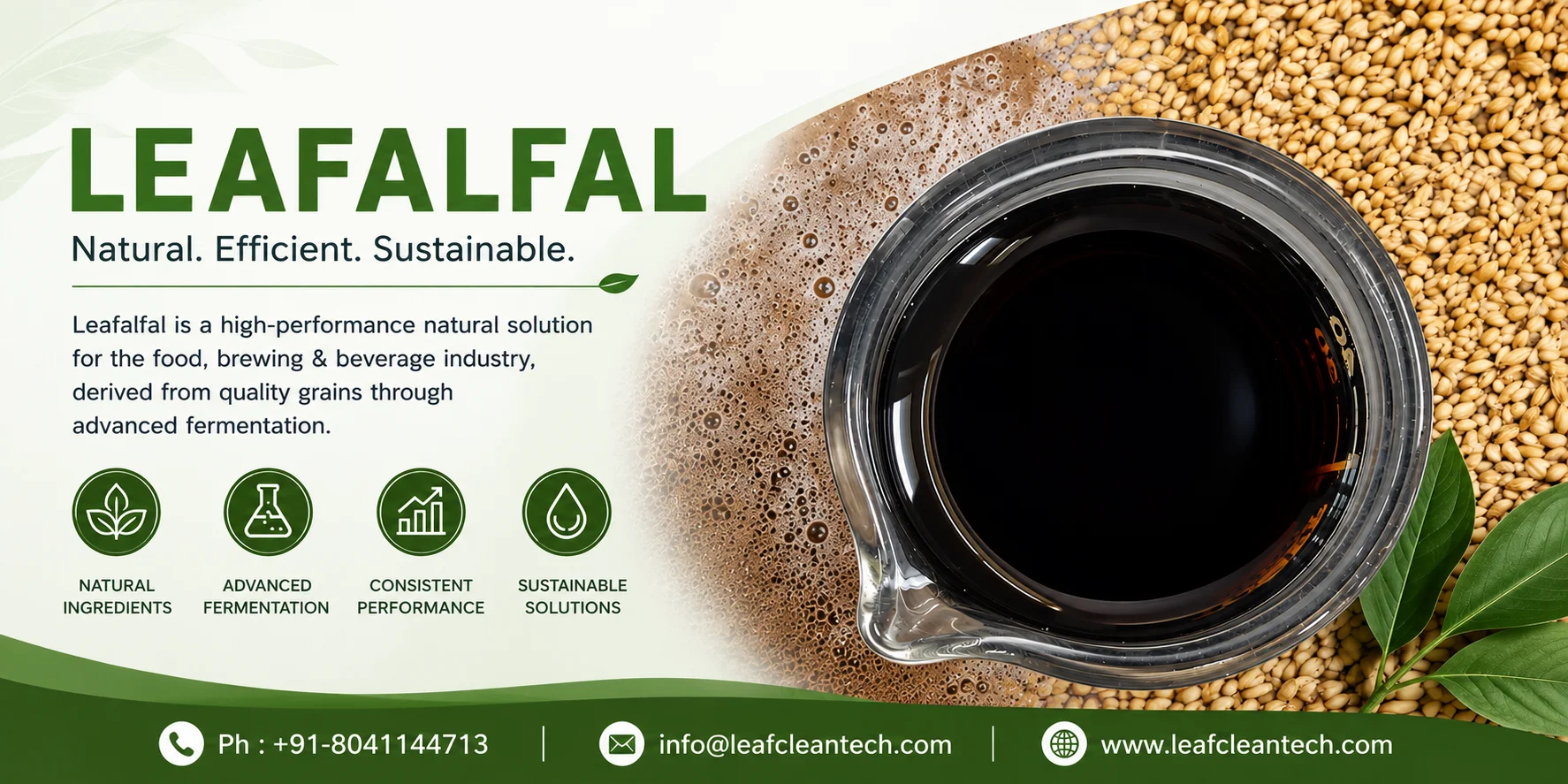
High temp bacterial alpha amylase plays a vital role in grain fermentation by breaking down gelatinized starch during liquefaction. This initial conversion reduces mash viscosity and produces shorter carbohydrate chains, known as dextrins and oligosaccharides. As a result, the next processing stage can convert these compounds into fermentable sugars.
For grain-based ethanol and alcohol production, efficient liquefaction helps prepare starch for downstream saccharification and fermentation. However, the enzyme must suit the process temperature, pH, substrate and operating conditions. Therefore, selecting the right formulation is an important step in building a consistent grain fermentation process.
Leaf CleanTech offers LEAFALFA L, a high-temperature bacterial alpha amylase designed for grain fermentation liquefaction. This guide explains how the enzyme works, its key benefits, common process challenges and how it fits into the wider fermentation workflow.
What Is High Temp Bacterial Alpha Amylase?
High temp bacterial alpha amylase is an enzyme used to break down starch at elevated process temperatures. It catalyses the hydrolysis of alpha-1,4 glycosidic linkages within gelatinized starch. In simple terms, it cuts long starch chains into shorter dextrins and oligosaccharides.
This action helps reduce the thickness of a starch slurry, making the material easier to handle during processing. Moreover, it prepares the starch for the next stage, where glucoamylase converts dextrins into glucose that yeast can ferment.
Because grain liquefaction involves heat, enzyme selection should account for thermal stability. A suitable enzyme must retain sufficient activity under the actual operating conditions used by the plant. The precise temperature, pH and dosage should follow the product's technical guidance and be validated in the process.
How Does Alpha Amylase Work in Grain Fermentation?
Grains such as corn, rice, wheat and sorghum contain starch stored in their kernels. Before yeast can convert this starch into alcohol, the production process must first make the starch accessible and break it into smaller carbohydrates.
- Grain preparation: The grain is cleaned, milled and mixed with water to create a slurry.
- Starch gelatinization: Heat and water cause starch granules to swell and become more accessible to enzymes.
- Liquefaction: High temp bacterial alpha amylase breaks internal starch bonds, forming shorter dextrins and oligosaccharides.
- Saccharification: Glucoamylase further converts these carbohydrate chains into fermentable glucose.
- Fermentation: Yeast uses fermentable sugars to produce ethanol and carbon dioxide.
Each stage prepares the substrate for the next. Therefore, poor liquefaction can affect downstream conversion, even when the plant uses suitable glucoamylase and yeast.
Why Thermostability Matters in Starch Liquefaction
During liquefaction, manufacturers heat the starch slurry to support gelatinization and processing. An enzyme that cannot tolerate the plant's operating conditions may lose activity too early. Consequently, the process may leave some starch incompletely liquefied.
A high-temperature bacterial alpha amylase designed for the intended liquefaction conditions can help maintain starch breakdown through the relevant processing stage. However, thermostability alone does not guarantee the best result. The plant must also consider enzyme activity, pH, contact time, starch concentration, mixing and dosage.
Matching enzyme performance to the process helps manufacturers assess liquefaction quality and identify potential bottlenecks before the mash moves to saccharification.
Key Benefits of High Temp Bacterial Alpha Amylase
1. Supports Starch Liquefaction
The enzyme breaks down gelatinized starch into shorter carbohydrate chains, preparing the substrate for downstream processing.
2. Helps Reduce Mash Viscosity
Starch-chain breakdown can reduce slurry thickness, supporting easier handling and movement through suitable processing equipment.
3. Prepares Starch for Saccharification
Alpha amylase produces dextrins that glucoamylase can further convert into fermentable glucose.
4. Supports Process Consistency
When the enzyme matches the process conditions, it can help manufacturers maintain more consistent liquefaction performance.
5. Fits Grain-Based Processing
Alpha amylase is used in suitable grain fermentation processes involving starch-rich raw materials.
6. Helps Identify Yield Opportunities
Monitoring liquefaction performance can reveal conversion gaps that may affect saccharification and the overall fermentation outcome.
Actual performance depends on feedstock composition, enzyme dosage, process conditions and equipment. Manufacturers should confirm improvements through controlled plant or laboratory trials.
LEAFALFA L: High Temp Bacterial Alpha Amylase
LEAFALFA L is Leaf CleanTech's high-temperature bacterial alpha amylase for grain fermentation liquefaction. It catalyses the hydrolysis of alpha-1,4 glycosidic linkages in gelatinized starch, helping reduce viscosity and produce dextrins and oligosaccharides.
The product is intended for use in suitable liquefaction applications. Before implementation, manufacturers should review the product specifications against their raw material, processing temperature, pH and production objectives.
| Product Detail | Published Information |
|---|---|
| Product name | LEAFALFA L |
| Enzyme type | High-temperature bacterial alpha amylase |
| Physical form | Liquid |
| Application | Brewing industry and grain fermentation liquefaction |
| Packaging | 25 kg HDPE drums |
| Published purity description | IP Purity |
| Minimum order quantity | 25 kg |
For current specifications, availability and quotations, visit the Leaf CleanTech fermentation products page or contact the technical team.
High Temp Alpha Amylase vs Glucoamylase
Alpha amylase and glucoamylase both help convert starch, but they perform different functions. Alpha amylase supports liquefaction, while glucoamylase supports saccharification. Using the enzymes at the appropriate stage helps prepare fermentable sugars for yeast.
| Comparison Point | High Temp Bacterial Alpha Amylase | Glucoamylase |
|---|---|---|
| Main stage | Liquefaction | Saccharification |
| Primary action | Breaks starch chains internally | Releases glucose from dextrins and other suitable starch-derived carbohydrates |
| Main products | Dextrins and oligosaccharides | Glucose |
| Process objective | Reduce viscosity and prepare starch for further conversion | Increase fermentable sugar availability |
| Relationship with yeast | Prepares the substrate for the next stage | Provides glucose that yeast can ferment |
Learn more about glucoamylase for grain fermentation and saccharification to understand how it complements alpha amylase.
Applications of High Temp Bacterial Alpha Amylase
Grain-Based Ethanol Production
In suitable ethanol production processes, alpha amylase helps liquefy grain starch before saccharification and yeast fermentation. The specific process conditions depend on the grain, plant design and target product.
Industrial Alcohol Manufacturing
Starch-based raw materials can serve as feedstocks for industrial alcohol production. Efficient liquefaction helps prepare the starch for further conversion into fermentable sugars.
Brewing and Grain-Based Fermentation
Alpha amylase supports starch processing in suitable brewing and grain fermentation applications. Manufacturers should choose an enzyme grade and processing protocol that match the intended end product and relevant requirements.
Processing Different Grain Feedstocks
Corn, rice, wheat and sorghum are among the raw materials used in grain-based fermentation. However, their starch properties and processing requirements can differ. Therefore, enzyme selection and dosing should account for the specific feedstock.
Signs Your Liquefaction Process Needs Attention
- High mash viscosity: The slurry remains thicker than expected after the liquefaction stage.
- Uneven processing: Lumps or poorly dispersed material indicate that mixing or starch preparation may need review.
- Slow saccharification: The next stage takes longer than expected, potentially because the liquefied substrate does not meet process requirements.
- Residual starch: Analysis indicates that starch conversion remains incomplete after liquefaction.
- Variable batch performance: Liquefaction results change between batches despite similar production targets.
These symptoms can have several causes, including raw-material variation, gelatinization conditions, mixing, pH, contact time or enzyme activity. Therefore, check the process data before increasing the enzyme dosage or changing the formulation.
How to Select the Right Alpha Amylase Enzyme
Choosing a suitable enzyme requires a clear understanding of the production process. Consider the following points before selecting a product for your plant.
- Confirm the feedstock: Identify the grain type, starch content and variation in incoming raw materials.
- Review the temperature profile: Match enzyme performance to the actual heating and liquefaction conditions.
- Check pH requirements: Confirm that the enzyme suits the pH maintained during the process.
- Evaluate enzyme activity: Review the product's technical data and the supplier's recommended method of application.
- Optimize dosing: Use the manufacturer's guidance and validate the dosage under representative operating conditions.
- Measure the result: Track viscosity, residual starch, saccharification performance and downstream fermentation indicators.
- Review the full process: Assess alpha amylase alongside glucoamylase, yeast and other relevant process inputs.
Explore Other Grain Fermentation Solutions
Alpha amylase is one part of the grain fermentation system. For a complete process, manufacturers may also need enzymes and yeast that support saccharification, sugar conversion and fermentation.
Glucoamylase Liquid Enzyme
Supports the conversion of liquefied dextrins into fermentable glucose during saccharification.
Active Dry Yeast
Supports the conversion of fermentable sugars into ethanol and carbon dioxide in suitable grain fermentation processes.
Fermentation Booster Enzyme
Targets certain residual carbohydrates that may remain after the primary starch-conversion steps.
Complete Fermentation Range
Explore Leaf CleanTech solutions for grain and other industrial fermentation applications.
Frequently Asked Questions
1. What does high temp bacterial alpha amylase do?
It breaks down gelatinized starch by hydrolysing internal alpha-1,4 glycosidic linkages. This action produces shorter dextrins and oligosaccharides while helping reduce mash viscosity during liquefaction.
2. Why is alpha amylase used during grain fermentation?
Grains contain starch that yeast cannot efficiently ferment in its original form. Alpha amylase supports the initial breakdown of starch, preparing the material for further conversion into fermentable sugars.
3. Why does thermostability matter in alpha amylase?
Grain liquefaction often operates at elevated temperatures. A suitable thermostable enzyme helps maintain the required activity under the intended process conditions, although performance also depends on pH, dosage and substrate properties.
4. What is the difference between alpha amylase and glucoamylase?
Alpha amylase breaks starch into shorter dextrins during liquefaction. Glucoamylase then converts suitable dextrins into glucose during saccharification, making sugar available for yeast fermentation.
5. What is LEAFALFA L?
LEAFALFA L is Leaf CleanTech's high-temperature bacterial alpha amylase for grain fermentation liquefaction. Consult the product page or technical team for current specifications and application guidance.
6. Which raw materials can use alpha amylase in fermentation?
Suitable starch-rich feedstocks may include corn, rice, wheat and sorghum. The required enzyme formulation and operating conditions depend on the raw material and the plant's process.
7. Can alpha amylase improve ethanol yield?
Effective liquefaction can support downstream sugar conversion by preparing starch for saccharification. Actual ethanol yield also depends on glucoamylase performance, yeast, raw-material quality and process control.
8. How do I determine the correct enzyme dosage?
Dosage depends on enzyme activity, starch concentration, temperature, pH and processing time. Follow the supplier's technical recommendations and validate the dose through controlled trials rather than using a universal rate.
9. What packaging is listed for LEAFALFA L?
The published product page lists LEAFALFA L as a liquid supplied in 25 kg HDPE drums, with a minimum order quantity of 25 kg. Confirm current availability and specifications with Leaf CleanTech before ordering.
10. Where can I enquire about high temp bacterial alpha amylase?
You can review the fermentation products range or contact the Leaf CleanTech team to discuss your raw material, process conditions and enzyme requirements.
Improve Your Starch Liquefaction Process
Looking for a high temp bacterial alpha amylase for grain fermentation? Discuss your feedstock, operating conditions and production goals with Leaf CleanTech to identify a suitable enzyme solution.
Contact Leaf CleanTech
Industrial Biotechnology Applications - Leaf CleanTech
September 26, 2026[…] Alpha-amylase hydrolyzes starch and reduces its molecular complexity, supporting the liquefaction stage. […]