
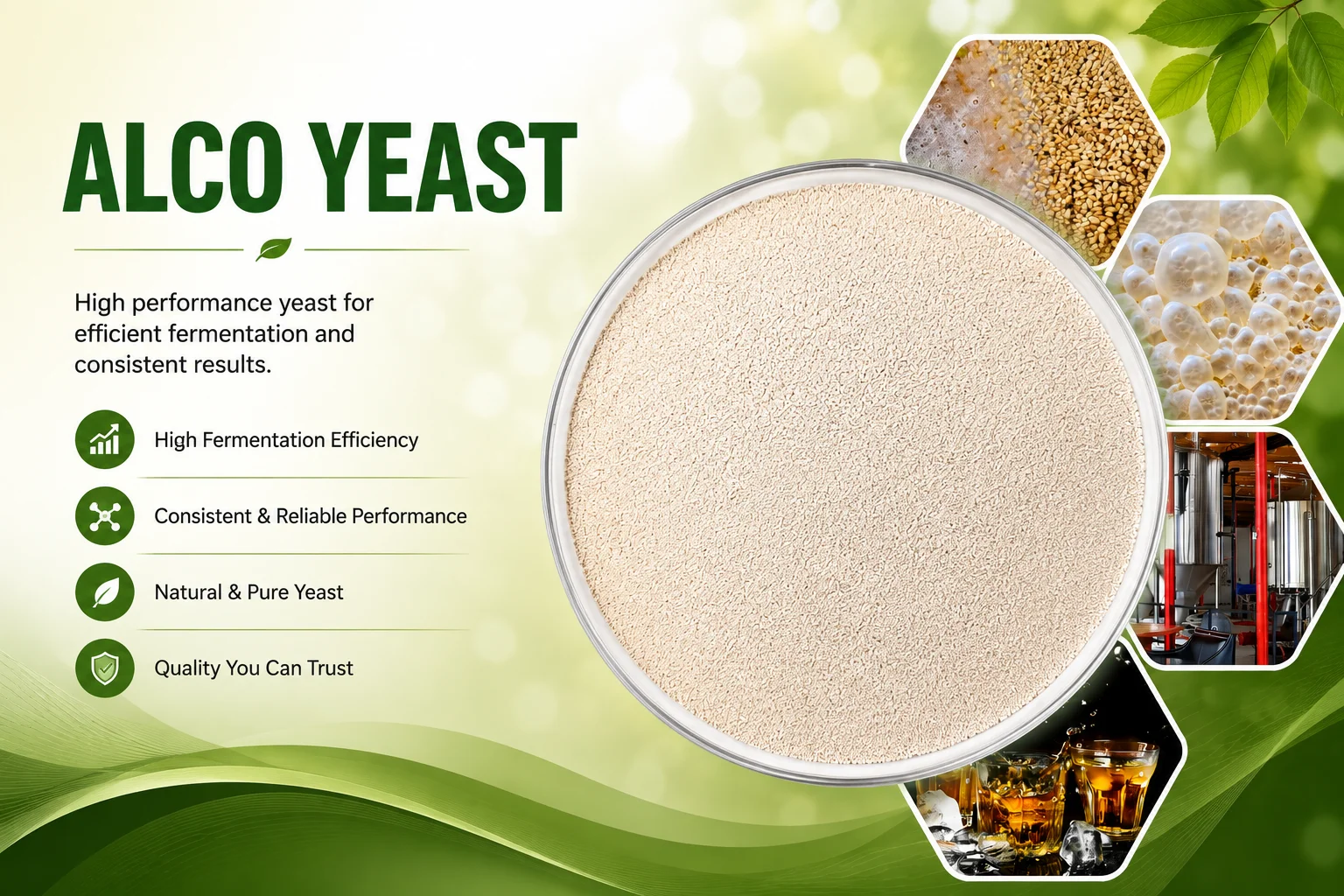
By the time yeast is pitched into a grain fermentation batch, alpha amylase and glucoamylase have already done the work of turning starch into fermentable glucose. What happens next depends entirely on the yeast strain doing the fermenting. Two batches with identical sugar content can finish with meaningfully different alcohol yields simply because one used a yeast strain matched to the feedstock and the other didn't.
Grain-based mashes present a specific set of conditions a fermentation yeast has to tolerate and perform well under:
The practical difference: a yeast strain bred for grain-based fermentation typically shows faster budding, higher tolerance to the alcohol concentrations high-gravity fermentation produces, and more consistent yield across batches than a generic yeast strain applied to the same mash.
| Feedstock | Typical Application |
|---|---|
| Corn | Fuel ethanol, industrial alcohol |
| Rice | Beverage alcohol |
| Wheat | Beverage and industrial alcohol |
| Sorghum | Ethanol, traditional beverages |
| Millets | Regional beverage production |
| Cassava | Ethanol, industrial alcohol |
LEAFALCO YEAST is formulated to handle this range of feedstocks without requiring a different strain for each — simplifying yeast management for plants that process more than one grain type. Leaf CleanTech also supplies LEAFALCO YEAST-M, a related strain built specifically for cane sugar molasses fermentation.
| Stage | Description |
|---|---|
| Liquefaction (Alpha Amylase) | Starch is liquefied into dextrins. |
| Saccharification (Glucoamylase) | Dextrins are broken into fermentable glucose. |
| Fermentation (Active Dry Yeast) | Yeast converts glucose into ethanol and CO₂ over a 48–96 hour cycle. |
| Yield Recovery (Booster Enzyme) | Un-fermentable sugars are converted into additional fermentable sugars. |
| Form | Granule |
|---|---|
| Packaging | 10 kg airtight metalised pouches |
| Application | Fermentation, beverage production |
| Shelf Life | 2 years |
| Minimum Order Quantity | 100 kg |
Full specifications and quote requests are available on the Fermentation Products page.
Yeast strain determines how efficiently sugars convert into alcohol — a strain suited to grain substrates delivers higher yield, faster budding, and better tolerance to high-gravity conditions.
Corn, rice, wheat, sorghum, millets, cassava, and cane sugar molasses.
Fermenting mashes with higher sugar concentration to boost alcohol output per batch — it requires a yeast strain tolerant of the higher resulting alcohol levels.
©2026. Leaf CleanTech - All Rights Reserved.