
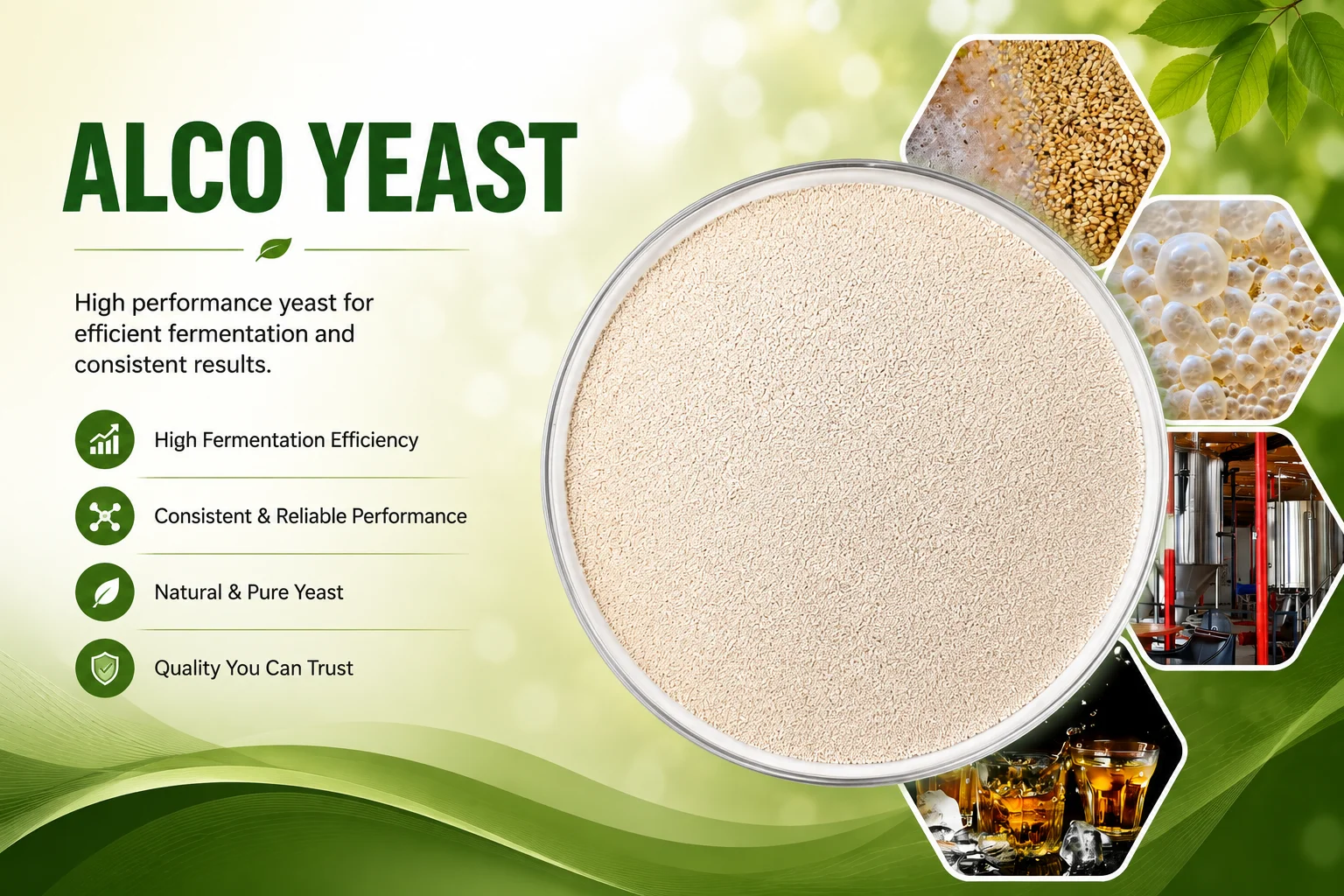
Active dry yeast plays an essential role in grain fermentation, ethanol production and beverage manufacturing. It converts fermentable sugars into ethanol and carbon dioxide through a biological process called fermentation. However, successful alcohol production depends on more than simply adding yeast. The yeast strain, grain quality, sugar availability and fermentation conditions all influence the final outcome.
Grains such as corn, rice, wheat, sorghum and millets contain starch rather than readily fermentable sugars. Therefore, manufacturers first use enzymes to convert starch into simpler sugars. Next, active dry yeast uses these sugars to produce alcohol. Consequently, selecting a suitable yeast strain is an important step in developing a consistent grain fermentation process.
Furthermore, industrial fermentation often involves high-sugar mash and increasing alcohol concentrations. These conditions place specific demands on yeast performance. A suitable active dry yeast should therefore match the feedstock, fermentation process and intended alcohol production requirements.
Leaf CleanTech offers LEAFALCO YEAST, an active dry yeast solution designed for grain-based fermentation. It supports applications involving corn, rice, wheat, sorghum, millets and cassava. In this guide, we explain how active dry yeast works, why strain selection matters and how manufacturers can evaluate the right yeast for their fermentation operations.
For a complete overview of the process, explore our grain fermentation process and enzymes guide.
Key Takeaways
- Active dry yeast converts fermentable sugars into ethanol and carbon dioxide.
- Grain fermentation requires enzymes to convert starch into fermentable sugars before yeast can use them.
- Yeast strain selection influences fermentation activity, alcohol tolerance and process consistency.
- Feedstock type, sugar concentration, temperature, pH and nutrient availability affect fermentation performance.
- LEAFALCO YEAST from Leaf CleanTech is designed for several grain-based fermentation applications.
- Manufacturers should review yeast specifications and conduct process trials before commercial use.
What Is Active Dry Yeast?
Active dry yeast is a dehydrated form of yeast that contains viable yeast cells. Manufacturers produce it by reducing moisture under controlled conditions while maintaining the yeast's ability to become active when they rehydrate it correctly.
In fermentation, yeast consumes fermentable sugars and converts them primarily into ethanol and carbon dioxide. This biological reaction allows manufacturers to produce alcoholic beverages, industrial alcohol and fuel ethanol from suitable raw materials.
Unlike enzymes, which catalyse specific chemical reactions, yeast is a living microorganism. Therefore, it requires suitable environmental conditions, nutrients and fermentable sugars to grow and carry out fermentation.
For grain-based alcohol production, active dry yeast enters the process after starch conversion. First, alpha amylase breaks down gelatinised starch into shorter carbohydrate chains. Next, glucoamylase converts suitable starch-derived carbohydrates into fermentable glucose. Finally, yeast converts the available glucose into alcohol.
Explore our fermentation products to learn about the enzymes and yeast solutions used across industrial fermentation applications.
How Does Active Dry Yeast Work in Grain Fermentation?
Active dry yeast performs the fermentation stage of grain alcohol production. However, yeast cannot directly convert intact grain starch into ethanol efficiently. Manufacturers must first prepare the grain and make fermentable sugars available.
The process generally involves the following stages.
1. Grain Preparation and Milling
First, manufacturers clean and mill the selected grain. They then mix the milled material with water to prepare a starch-containing slurry. Proper preparation helps expose the starch and supports the next processing stage.
2. Starch Liquefaction
Next, manufacturers heat the slurry under controlled conditions to gelatinise the starch. They then add high-temperature bacterial alpha amylase to break large starch molecules into shorter dextrins and oligosaccharides.
This reaction also reduces mash viscosity, making the material easier to process. For this stage, explore high-temperature bacterial alpha amylase for grain fermentation.
3. Saccharification
After liquefaction, manufacturers use glucoamylase to convert starch-derived dextrins into fermentable glucose. This step prepares the sugar source that yeast needs for alcohol production.
Consequently, effective saccharification plays an important role in providing fermentable sugars for the next stage. Learn more about glucoamylase enzyme for grain fermentation.
4. Yeast Activation and Fermentation
Once the mash contains suitable fermentable sugars and meets the required process conditions, manufacturers introduce active dry yeast according to the product instructions. The yeast cells become metabolically active and use glucose as a substrate.
During fermentation, yeast produces ethanol and carbon dioxide. Meanwhile, fermentation conditions influence yeast activity, sugar consumption and alcohol formation.
5. Fermentation Yield Evaluation
Finally, manufacturers monitor fermentation progress and evaluate the alcohol concentration, residual sugars and other relevant process indicators. They can then identify opportunities to improve the overall process.
In some grain fermentation operations, a booster enzyme can also help convert certain residual, otherwise unfermentable carbohydrate fractions into fermentable sugars. Explore BOOSTERZYME fermentation booster enzyme to understand its role in grain fermentation.
Why Does Active Dry Yeast Selection Matter?
Not all yeast strains perform equally under every fermentation condition. In particular, grain-based fermentation can involve different sugar profiles, nutrient levels and alcohol concentrations. Therefore, manufacturers should select a strain that matches their raw materials and production objectives.
1. Fermentation Activity
Yeast activity influences how efficiently the microorganism consumes available sugars. A suitable strain should perform consistently under the intended fermentation conditions. Additionally, manufacturers should evaluate fermentation progress across multiple production batches.
2. Alcohol Tolerance
As fermentation progresses, ethanol concentration increases. However, high alcohol levels can place stress on yeast cells and affect their metabolic activity. Therefore, alcohol tolerance is an important consideration when selecting yeast for high-gravity fermentation.
3. Feedstock Compatibility
Different grains produce mashes with different sugar, nutrient and processing characteristics. For example, corn, rice and wheat do not create identical fermentation environments. Consequently, a yeast strain should suit the raw materials used in the plant.
4. Fermentation Consistency
Industrial manufacturers need predictable performance across production batches. Therefore, they should assess yeast activity, process compatibility and batch-to-batch consistency rather than focus only on the initial fermentation rate.
5. Fermentation Cycle Time
Fermentation time influences fermenter utilisation and plant scheduling. A suitable yeast strain can support the required process cycle when manufacturers maintain appropriate operating conditions. Nevertheless, the actual cycle time depends on the feedstock, sugar concentration, yeast pitch and fermentation environment.
6. Performance Under High-Gravity Conditions
High-gravity fermentation uses a mash with a relatively high concentration of fermentable sugars. This approach can increase the potential alcohol concentration per batch. However, it also creates greater osmotic and alcohol-related stress for yeast. Therefore, manufacturers should evaluate strain suitability before adopting high-gravity conditions.
Applications of Active Dry Yeast
Active dry yeast has applications across several fermentation industries. However, the strain, operating conditions and process requirements can differ according to the raw material and final product.
1. Grain-Based Ethanol Production
Grain-based ethanol production uses starch-rich raw materials such as corn, wheat, rice and sorghum. Manufacturers first convert the starch into fermentable sugars. Next, active dry yeast converts those sugars into ethanol.
Therefore, yeast selection plays an important role in industrial alcohol production. Manufacturers should consider alcohol tolerance, fermentation activity and compatibility with the grain mash.
2. Industrial Alcohol Production
Industrial alcohol manufacturers use fermentation processes to produce ethanol for suitable industrial applications. Depending on the process, they may use corn, cassava, sorghum or other starch-containing raw materials.
In addition, manufacturers must maintain consistent fermentation conditions and monitor the process throughout the production cycle.
3. Beverage Alcohol Production
Yeast plays a central role in beverage fermentation because it converts fermentable sugars into ethanol and other fermentation products. Different beverages require different raw materials, yeast characteristics and production conditions.
Consequently, manufacturers should select a yeast strain that matches the beverage process and the required fermentation profile.
4. Fuel Ethanol Production
Fuel ethanol production uses fermentation to convert suitable fermentable sugars into ethanol. Grain-based processes require effective starch conversion before yeast fermentation begins.
Furthermore, manufacturers need to evaluate yeast performance under their operating conditions to support process consistency and production objectives.
5. Cassava-Based Fermentation
Cassava provides starch that manufacturers can process into fermentable sugars. After starch conversion, active dry yeast can ferment the available sugars into ethanol. However, the process should account for the characteristics of cassava-based mash and the required fermentation conditions.
Grains Used in Active Dry Yeast Fermentation
Different grain and starch-based feedstocks offer different processing characteristics. Therefore, manufacturers should consider raw material composition when selecting enzymes and yeast.
| Feedstock | Typical Application | Processing Consideration |
|---|---|---|
| Corn | Fuel ethanol and industrial alcohol | High starch content; requires effective starch conversion. |
| Rice | Beverage alcohol and ethanol | Requires suitable milling, starch processing and saccharification. |
| Wheat | Beverage and industrial alcohol | Mash viscosity and raw material composition require process attention. |
| Sorghum | Ethanol and traditional beverages | Requires suitable starch conversion and fermentation conditions. |
| Millets | Regional beverage production and ethanol applications | Grain preparation and starch accessibility influence processing. |
| Cassava | Ethanol and industrial alcohol | Starch conversion is essential before yeast fermentation. |
Although these feedstocks contain starch, their processing requirements are not identical. Therefore, manufacturers should assess the milling, liquefaction, saccharification and fermentation stages for each raw material.
For more information about feedstock selection and process stages, read our complete grain fermentation guide.
Active Dry Yeast and Its Role in Ethanol Yield
Ethanol yield depends on how effectively the process converts available starch into fermentable sugars and then converts those sugars into alcohol. Therefore, manufacturers should evaluate the entire fermentation sequence rather than focus on yeast alone.
1. Availability of Fermentable Sugars
Yeast requires fermentable sugars to produce ethanol. If liquefaction or saccharification leaves a significant amount of starch-derived material unconverted, yeast cannot use all of that material directly.
Consequently, manufacturers should optimise starch conversion before evaluating yeast performance.
2. Yeast Strain Characteristics
Different strains can respond differently to alcohol concentration, sugar levels and other process conditions. Therefore, manufacturers should select a strain that matches their fermentation environment.
3. Fermentation Conditions
Temperature, pH, nutrient availability and fermentation time influence yeast activity. In addition, poor process control can create conditions that reduce fermentation consistency.
4. Alcohol Tolerance
As yeast produces ethanol, the alcohol concentration in the mash rises. However, excessive alcohol stress can affect yeast activity. Therefore, manufacturers should evaluate the strain's suitability for the target alcohol concentration.
5. Residual Sugar Management
Residual sugars may indicate incomplete conversion or fermentation. However, manufacturers should identify the type of remaining carbohydrate before deciding on corrective action.
For example, a fermentation booster enzyme can target certain unfermentable carbohydrate fractions left after starch conversion. Learn more about fermentation booster enzymes for grain processing.
Overall, suitable yeast selection works best alongside effective starch conversion, appropriate nutrients and controlled fermentation conditions.
Factors That Affect Active Dry Yeast Performance
Several factors influence how yeast behaves during industrial fermentation. Therefore, manufacturers should monitor the following parameters throughout the process.
| Factor | Why It Matters |
|---|---|
| Yeast strain | Different strains have different fermentation characteristics and stress tolerances. |
| Sugar concentration | Determines the fermentable substrate available to yeast and influences osmotic stress. |
| Alcohol concentration | Increasing ethanol levels can affect yeast cell activity. |
| Temperature | Influences yeast metabolism and fermentation rate. |
| pH | Affects the fermentation environment and microbial activity. |
| Nutrient availability | Yeast needs suitable nutrients for growth and metabolic activity. |
| Yeast pitch rate | Influences the initial yeast population and fermentation start-up. |
| Contamination control | Unwanted microorganisms can compete for nutrients and affect process consistency. |
| Fermentation time | Determines the time available for sugar conversion under the selected conditions. |
However, no single operating value suits every yeast strain and feedstock. Manufacturers should follow the supplier's technical recommendations and establish suitable process parameters through controlled trials.
Active Dry Yeast vs Other Fermentation Inputs
Successful grain fermentation depends on several inputs. Although yeast and enzymes work together, they perform different functions. Therefore, understanding their roles helps manufacturers identify process requirements.
| Fermentation Input | Main Function | Process Stage |
|---|---|---|
| High-temperature alpha amylase | Breaks gelatinised starch into dextrins and shorter carbohydrates. | Liquefaction |
| Glucoamylase | Converts starch-derived dextrins into fermentable glucose. | Saccharification |
| Active dry yeast | Converts fermentable sugars into ethanol and carbon dioxide. | Fermentation |
| Fermentation booster enzyme | Acts on certain residual unfermentable carbohydrate fractions. | Fermentation process support |
In simple terms, alpha amylase and glucoamylase prepare the fermentable sugars, while yeast converts those sugars into alcohol. Additionally, a suitable booster enzyme may help address certain carbohydrate fractions that remain after the main starch conversion stages.
Explore the individual solutions: LEAFALFA L alpha amylase, glucoamylase liquid enzyme and BOOSTERZYME fermentation booster.
Common Challenges in Grain Fermentation
Even well-designed fermentation plants can experience variations in alcohol yield and process consistency. However, identifying the underlying cause helps manufacturers choose the right corrective action.
Incomplete Starch Conversion
If liquefaction or saccharification does not convert enough starch into fermentable sugars, yeast receives less usable substrate. Therefore, manufacturers should review enzyme activity, process temperature, pH and reaction time.
Unsuitable Yeast Selection
A yeast strain that does not match the feedstock or alcohol concentration may struggle under the process conditions. Consequently, manufacturers should evaluate strain characteristics before large-scale implementation.
High Alcohol Stress
Increasing ethanol concentration can place stress on yeast cells. Therefore, high-gravity fermentation requires careful consideration of yeast tolerance and process management.
Temperature and pH Variations
Changes in temperature and pH can influence yeast metabolism. In addition, inconsistent process control may affect fermentation time and batch performance.
Nutrient Limitations
Yeast requires suitable nutrients for growth and fermentation. If the mash lacks important nutrients, yeast activity may decline. Therefore, manufacturers should assess the nutritional characteristics of the feedstock and process inputs.
Microbial Contamination
Unwanted microorganisms can compete with yeast for available nutrients and may produce unwanted fermentation by-products. Consequently, plant hygiene, equipment cleaning and contamination monitoring remain important.
Residual Unfermented Sugars
Residual sugars or carbohydrate fragments can indicate incomplete conversion or fermentation. However, manufacturers should analyse the remaining carbohydrate types before selecting an enzyme or process adjustment.
LEAFALCO YEAST – Active Dry Yeast by Leaf CleanTech
Leaf CleanTech offers LEAFALCO YEAST, an active dry yeast strain designed for alcohol production from a range of grain-based raw materials. It is intended for applications involving corn, rice, wheat, sorghum, millets and cassava.
The product supports manufacturers who need a yeast solution for grain fermentation and beverage production. Furthermore, its strain selection focuses on fermentation requirements associated with different grain feedstocks and higher alcohol concentrations.
Key Product Features
- Grain fermentation application: Designed for fermentation using several grain and starch-based raw materials.
- Multiple feedstock options: Suitable for evaluating applications involving corn, rice, wheat, sorghum, millets and cassava.
- Alcohol production: Supports the conversion of fermentable sugars into ethanol.
- High-gravity fermentation: Designed with the requirements of higher alcohol concentration processes in mind.
- Fermentation consistency: Developed for grain-based fermentation applications across different feedstocks.
LEAFALCO YEAST Product Specification
| Specification | Product Details |
|---|---|
| Product Name | LEAFALCO YEAST |
| Product Type | Active Dry Yeast |
| Form | Granule |
| Application | Grain fermentation and beverage production |
| Feedstocks | Corn, rice, wheat, sorghum, millets and cassava |
| Packaging | 10 kg airtight metalised pouches |
| Shelf Life | 2 years |
| Minimum Order Quantity | 100 kg |
Always confirm current product availability, storage instructions, handling recommendations and technical specifications with Leaf CleanTech before placing an order.
For product details and commercial enquiries, visit the Leaf CleanTech fermentation products page.
LEAFALCO YEAST vs LEAFALCO YEAST-M
Leaf CleanTech offers different yeast solutions for grain and molasses fermentation. Although both products support alcohol production, they address different raw material requirements.
| Comparison | LEAFALCO YEAST | LEAFALCO YEAST-M |
|---|---|---|
| Primary Application | Grain fermentation | Cane sugar molasses fermentation |
| Raw Material Focus | Corn, rice, wheat, sorghum, millets and cassava | Cane sugar molasses |
| Process Requirement | Fermentation of sugars obtained through starch conversion | Fermentation of sugars available in molasses |
| Selection Consideration | Grain mash composition and fermentation conditions | Molasses composition and fermentation conditions |
Therefore, manufacturers should choose the yeast product according to the main fermentation substrate. For cane sugar molasses applications, explore our molasses fermentation enzymes and solutions.
How to Choose the Right Active Dry Yeast Supplier
Choosing a reliable active dry yeast supplier is important for maintaining fermentation consistency and product quality. However, buyers should evaluate more than the product price or packaging. Instead, they should review technical suitability and supply reliability.
1. Check Feedstock Compatibility
First, confirm that the yeast strain suits your grain or starch-based raw material. Different feedstocks can create different fermentation environments. Therefore, discuss your actual raw materials with the supplier.
2. Review Fermentation Characteristics
Next, evaluate the strain's fermentation activity, alcohol tolerance and suitability for your target alcohol concentration. Additionally, ask for relevant technical information to support product comparison.
3. Verify Product Specifications
Review the product form, viable yeast information, packaging, shelf life and storage recommendations. Furthermore, request a current technical data sheet and quality documentation.
4. Evaluate Technical Support
A knowledgeable supplier should understand the fermentation process and help customers evaluate yeast selection. Therefore, discuss your feedstock, process conditions and production objectives before finalising the product.
5. Confirm Commercial Supply
Finally, check product availability, minimum order quantity, packaging and delivery arrangements. Consistent supply helps manufacturers plan their production schedules more effectively.
For more information about industrial enzyme and fermentation supply, explore Leaf CleanTech as an enzyme supplier in Bangalore.
Frequently Asked Questions About Active Dry Yeast
1. What is active dry yeast?
Active dry yeast is a dehydrated form of viable yeast used in fermentation. When manufacturers prepare it according to the product instructions, the yeast becomes active and converts fermentable sugars into ethanol and carbon dioxide.
2. What is active dry yeast used for?
Active dry yeast is used in several fermentation applications, including beverage production, grain-based ethanol manufacturing and industrial alcohol production. The suitable strain depends on the raw material and process requirements.
3. How does active dry yeast produce ethanol?
Yeast consumes fermentable sugars and converts them primarily into ethanol and carbon dioxide through alcoholic fermentation. The process also produces other minor by-products depending on the yeast strain and fermentation conditions.
4. Can active dry yeast ferment grain directly?
Yeast cannot efficiently ferment intact grain starch directly. Manufacturers first use enzymes such as alpha amylase and glucoamylase to convert starch into fermentable sugars. Then yeast converts those sugars into ethanol.
5. Which grains can be used with active dry yeast?
Common grain and starch-based feedstocks include corn, rice, wheat, sorghum, millets and cassava. However, the preparation and fermentation requirements vary according to the raw material.
6. Why is yeast strain selection important in ethanol production?
Different strains have different fermentation characteristics and tolerances. Therefore, the right strain can support more consistent fermentation under the intended sugar concentration, alcohol level and process conditions.
7. What is high-gravity fermentation?
High-gravity fermentation uses a mash with a higher concentration of fermentable sugars. This approach aims to increase the potential alcohol concentration per batch. However, it also increases osmotic and alcohol-related stress on yeast cells.
8. What is the difference between active dry yeast and instant yeast?
Active dry yeast and instant yeast differ in their processing, granule characteristics and preparation requirements. Their intended applications also vary. For industrial alcohol production, manufacturers should select a yeast strain specifically suited to the fermentation process rather than assume that baking yeast is interchangeable with industrial fermentation yeast.
9. What is the role of alpha amylase in grain fermentation?
Alpha amylase breaks down gelatinised starch into shorter dextrins and oligosaccharides during liquefaction. This prepares the material for further conversion during saccharification.
10. What is the role of glucoamylase in grain fermentation?
Glucoamylase converts starch-derived dextrins into fermentable glucose. Yeast then uses this glucose during alcohol fermentation.
11. How does temperature affect active dry yeast?
Temperature influences yeast metabolism, growth and fermentation activity. Excessively high or low temperatures can affect performance. Therefore, manufacturers should follow the supplier's recommended operating range for the selected strain.
12. How does alcohol concentration affect yeast?
Increasing ethanol concentration can create stress for yeast cells and affect their metabolic activity. Therefore, alcohol tolerance is an important selection factor for high-gravity fermentation.
13. What causes low ethanol yield during grain fermentation?
Low ethanol yield can result from incomplete starch conversion, unsuitable yeast selection, poor nutrient availability, process variations, contamination or residual unfermented sugars. Manufacturers should examine each stage to identify the main cause.
14. What is LEAFALCO YEAST?
LEAFALCO YEAST is Leaf CleanTech's active dry yeast solution for grain-based fermentation. It is designed for applications involving corn, rice, wheat, sorghum, millets and cassava.
15. What is the shelf life of LEAFALCO YEAST?
The product page lists a shelf life of two years. Always check the current product label and storage instructions for the applicable batch.
16. What is the packaging of LEAFALCO YEAST?
The product page lists 10 kg airtight metalised pouches. Contact Leaf CleanTech to confirm current packaging and availability.
17. What is the difference between LEAFALCO YEAST and LEAFALCO YEAST-M?
LEAFALCO YEAST serves grain-based fermentation, while LEAFALCO YEAST-M is designed for cane sugar molasses fermentation. Therefore, select the product according to the primary fermentation raw material.
18. Where can I buy active dry yeast for grain fermentation in India?
You can contact Leaf CleanTech to enquire about LEAFALCO YEAST, product specifications, minimum order quantity and commercial availability.
Looking for Active Dry Yeast for Grain Fermentation?
Selecting the right active dry yeast can support consistent fermentation and help manufacturers meet their alcohol production objectives. However, successful results also depend on effective starch conversion, suitable nutrients and controlled process conditions.
Leaf CleanTech offers LEAFALCO YEAST for grain-based fermentation applications involving corn, rice, wheat, sorghum, millets and cassava. Additionally, its fermentation portfolio includes alpha amylase, glucoamylase and fermentation booster solutions.
Whether you manufacture industrial alcohol, ethanol or fermented beverages, contact Leaf CleanTech to discuss your feedstock, fermentation process and yeast requirements.
Contact Leaf CleanTech for Active Dry Yeast Enquiries
Leaf CleanTech Pvt. Ltd.
#371 & 372, 10th Cross, 4th Phase,
Peenya Industrial Area, Bengaluru – 560058, India.
Phone: +91 80 4114 4713
Email: info@leafcleantech.com
Alpha amylase for grain fermentation - Leaf CleanTech
August 3, 2026[…] Read the active dry yeast guide → […]