
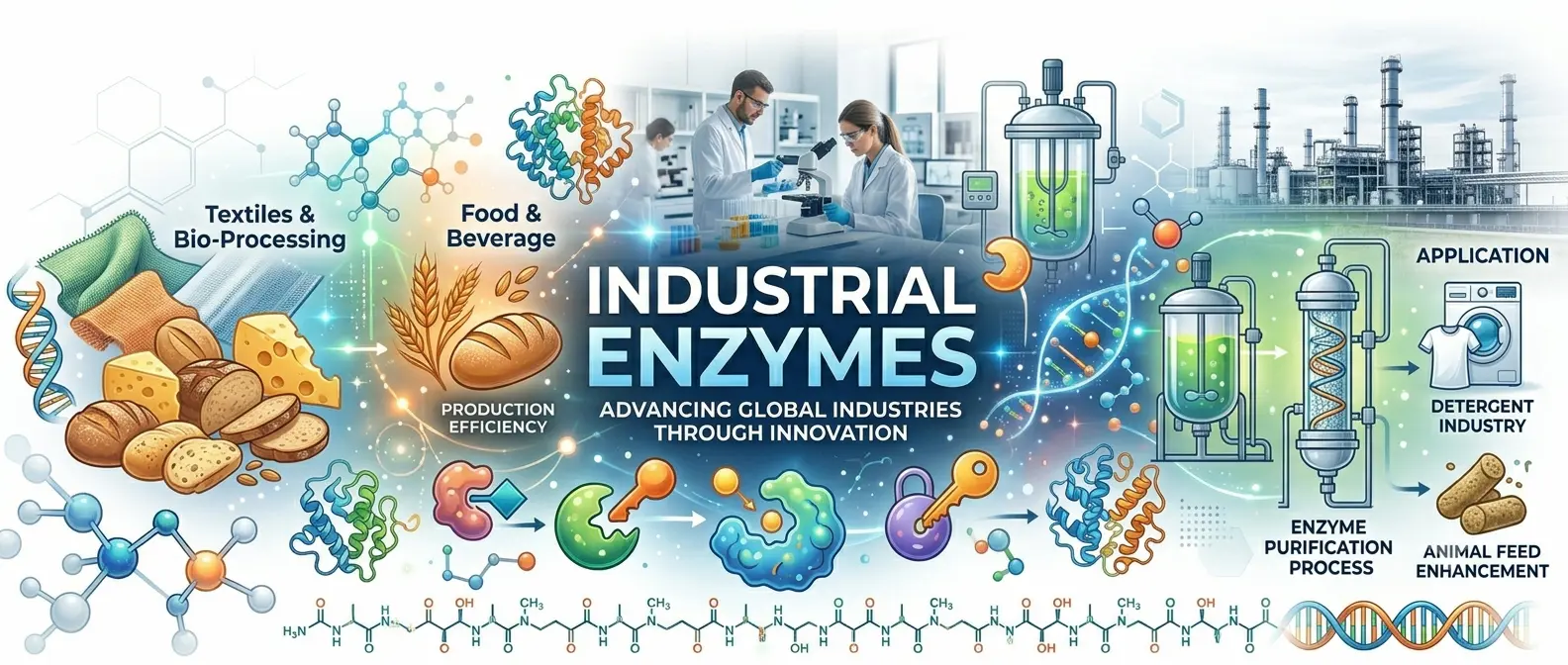
Industrial enzymes play an important role in improving efficiency, product quality and process performance across several industries. From food processing and animal nutrition to industrial fermentation, enzymes help manufacturers achieve better results through targeted biological reactions.
As industries increasingly adopt efficient and sustainable manufacturing practices, the demand for reliable enzyme solutions continues to grow. Therefore, choosing the right industrial enzymes manufacturer in India can help businesses improve production processes, optimise raw material utilisation and maintain consistent product quality.
Leaf CleanTech provides enzyme solutions for food and nutrition, animal feed and fermentation applications. This guide explores industrial enzymes, their applications, key benefits and the factors businesses should consider when selecting an enzyme manufacturer.
Key Takeaways
- Industrial enzymes support efficient manufacturing across food processing, animal feed and fermentation industries.
- Different enzymes perform specific functions, such as breaking down starch, proteins, fats and fibres.
- Enzyme-based processing can improve production efficiency and support better resource utilisation.
- Selecting the right enzyme depends on application, operating conditions and processing requirements.
- Leaf CleanTech offers enzyme solutions for multiple industrial applications.
What Are Industrial Enzymes?
Industrial enzymes are biological catalysts that speed up specific chemical reactions during manufacturing and processing. They help break down complex substances into simpler compounds, making industrial processes more efficient and manageable.
Unlike conventional chemical treatments, enzymes work on specific substrates. For example, amylase breaks down starch, protease acts on proteins, and lipase helps break down fats. Similarly, cellulase and xylanase support the breakdown of plant-based fibres.
Manufacturers use these enzymes across food production, animal nutrition, fermentation, agriculture and other industrial applications. As a result, enzyme technology has become an important part of modern industrial processing.
How Do Industrial Enzymes Work?
Enzymes work by interacting with specific substances called substrates. They accelerate biochemical reactions without being consumed in the process. However, each enzyme performs a particular function under suitable operating conditions.
The basic enzyme process involves the following steps:
- Substrate recognition: The enzyme identifies and binds to its specific substrate.
- Reaction acceleration: It helps convert the substrate into simpler products.
- Product release: The resulting products separate from the enzyme.
- Continued activity: The enzyme can participate in further reactions, provided suitable conditions remain available.
Temperature, pH, processing time and enzyme dosage can influence performance. Therefore, manufacturers must select an enzyme that matches their specific production conditions.
Types of Industrial Enzymes and Their Applications
Different industries require different enzyme functions. While some enzymes break down carbohydrates, others act on proteins, fats and fibres. The following table highlights commonly used industrial enzymes and their applications.
| Enzyme | Primary Function | Common Applications |
|---|---|---|
| Fungal Alpha Amylase | Breaks down starch into smaller carbohydrates. | Food processing, starch conversion and related applications. |
| Gluco Amylase | Converts starch-derived carbohydrates into glucose. | Starch processing, glucose production and fermentation. |
| Protease | Breaks down proteins into peptides and amino acids. | Food processing, protein hydrolysis and animal feed. |
| Cellulase | Breaks down cellulose and plant fibres. | Food processing and fibre-related applications. |
| Xylanase | Breaks down xylan-based plant cell wall components. | Animal feed and fibre processing. |
| Beta Glucanase | Breaks down beta-glucans. | Animal feed and food processing. |
| Lipase | Breaks down fats and oils. | Food processing and animal nutrition. |
| Alpha Galactosidase | Breaks down specific complex carbohydrates. | Food processing and animal feed. |
| Hemicellulase | Breaks down hemicellulose. | Food processing and fibre degradation. |
| Invertase | Converts sucrose into glucose and fructose. | Food processing and confectionery applications. |
| Phytase | Breaks down phytate and helps release phosphorus. | Animal feed and livestock nutrition. |
| Pectinase | Breaks down pectin substances. | Fruit processing and food applications. |
Each enzyme serves a different purpose. Therefore, manufacturers should evaluate the substrate, processing conditions and desired output before selecting an enzyme solution.
Major Industrial Applications of Enzymes
1. Food and Nutrition Processing
Food manufacturers use enzymes to support several processing activities, including starch conversion, protein breakdown, sugar modification and fibre processing. These applications can help improve processing efficiency and achieve specific product characteristics.
For example, amylase supports starch conversion, while protease helps with protein hydrolysis. Similarly, cellulase, pectinase and hemicellulase support different plant-based processing requirements.
Leaf CleanTech offers a range of food and nutrition enzyme solutions for different processing needs. Explore the Food and Nutrition Enzymes range to discover available products.
Explore related enzyme products:
- Fungal Alpha Amylase Powder
- Gluco Amylase Powder
- Protease Enzyme
- Food Grade Cellulase
- Alpha Galactosidase
- Invertase Enzyme Powder
- Hemicellulase Enzyme Powder
2. Animal Feed and Nutrition
Animal feed manufacturers use enzymes to improve the utilisation of nutrients present in feed ingredients. Certain feed components contain complex carbohydrates, proteins and phytate that animals may not digest efficiently on their own.
Feed enzymes help break down these components into simpler substances. For instance, protease acts on proteins, xylanase breaks down arabinoxylans, and phytase helps release phosphorus from phytate.
Depending on the feed formulation, enzyme combinations can support nutrient availability and feed processing requirements. Leaf CleanTech provides enzyme solutions for different animal feed applications.
Explore the Animal Feed Enzymes range and related products:
- Protease Enzyme
- Xylanase Feed Enzyme
- Beta Glucanase
- Lipase Feed Enzyme
- Hemicellulase
- Alpha Galactosidase
3. Industrial Fermentation
Fermentation plays a major role in producing alcohol, organic acids, bio-based products and other industrial materials. Enzymes support this process by converting complex raw materials into fermentable sugars.
For example, alpha amylase helps break down starch into smaller carbohydrates, while glucoamylase converts these carbohydrates into glucose. Yeast can then use fermentable sugars during alcohol production.
Enzyme selection depends on the raw material, process temperature, pH and fermentation requirements. Therefore, manufacturers should consider the complete production process when choosing fermentation enzymes.
Leaf CleanTech provides solutions for industrial fermentation applications. Explore the Fermentation Products range, which includes:
- High Temperature Bacterial Alpha Amylase
- Glucoamylase Liquid Enzyme
- Active Dry Yeast
- Fermentation Booster Enzyme
- Molasses Fermentation Booster
- Cane Juice and Syrup Fermentation Enzyme
- Condensate Water Recycler Enzyme
- Molasses Storage Enzyme
4. Other Industrial Processing Applications
Enzyme technology also supports specialised industrial processes where manufacturers need controlled biological reactions. Depending on the application, enzymes can help process starches, proteins, fats and plant-based materials.
Businesses can select individual enzymes or suitable enzyme combinations based on their raw materials and process objectives. In addition, application-specific evaluation helps determine the right enzyme dosage and operating conditions.
Industrial Enzymes vs Conventional Chemical Processing
Enzymes and conventional chemical treatments can both support industrial processing. However, they differ in their working mechanisms, specificity and operating requirements.
| Comparison Factor | Enzyme-Based Processing | Conventional Chemical Processing |
|---|---|---|
| Working mechanism | Uses biological catalysts. | Uses chemical reactions and processing agents. |
| Specificity | Generally acts on specific substrates. | May involve broader chemical reactions. |
| Operating conditions | Requires suitable temperature and pH conditions. | Depends on the chemical process and reagents. |
| Process control | Enables targeted biological reactions. | Requires control of chemical concentration and reaction conditions. |
| Application suitability | Useful for specific biological conversions. | Suitable for a wide range of chemical treatments. |
The right approach depends on the manufacturing objective, raw material and required product characteristics. In many applications, enzyme technology can complement existing processing methods.
Benefits of Using Industrial Enzymes
Industrial enzymes offer several potential advantages when manufacturers select and apply them correctly. Their benefits depend on the enzyme type, dosage and process conditions.
1. Improved Processing Efficiency
Enzymes accelerate specific reactions, helping manufacturers achieve targeted conversions within suitable processing conditions.
2. Better Raw Material Utilisation
Certain enzymes break down complex materials into simpler components. As a result, manufacturers can improve the utilisation of selected raw materials.
3. Targeted Processing
Enzymes act on specific substrates. Therefore, businesses can select products that address particular processing challenges.
4. Support for Product Consistency
When manufacturers maintain suitable dosage and operating conditions, enzymes can support consistent processing outcomes.
5. Process Optimisation
The right enzyme can help manufacturers optimise selected stages of production. However, performance depends on process design and application-specific testing.
6. Support for Sustainable Manufacturing
Enzyme-based processing can support resource-efficient manufacturing strategies. Depending on the application, it may also help reduce reliance on certain intensive processing treatments.
How to Choose the Right Industrial Enzyme Manufacturer in India
Selecting an enzyme manufacturer is an important decision for businesses that depend on consistent production quality. However, the right supplier should offer more than a product catalogue. It should also understand the technical requirements of your application.
1. Product Range
Check whether the manufacturer offers enzymes for your industry. A broad portfolio can help businesses source different enzyme solutions from one supplier.
2. Application Knowledge
Choose a manufacturer that understands your processing requirements, raw materials and intended outcomes.
3. Product Specifications
Review enzyme activity, formulation, recommended dosage, storage requirements and technical specifications before making a decision.
4. Quality and Consistency
Consistent enzyme performance is important for maintaining stable manufacturing operations. Therefore, evaluate the manufacturer's quality practices and product documentation.
5. Technical Support
Application guidance can help businesses select suitable enzymes and optimise their use under actual processing conditions.
6. Customised Solutions
Some manufacturing processes require specific enzyme combinations or formulations. Consider whether the supplier can evaluate and support application-specific requirements.
Why Choose Leaf CleanTech for Industrial Enzyme Solutions?
Leaf CleanTech focuses on enzyme solutions for food and nutrition, animal feed and industrial fermentation. Its product portfolio supports businesses looking for application-specific enzyme products across different processing sectors.
By understanding the requirements of each application, businesses can identify suitable enzyme options for their production processes.
- Multiple application segments: Enzyme solutions for food and nutrition, animal feed and fermentation.
- Product variety: Different enzyme types for starch, protein, fat and fibre processing.
- Application-focused solutions: Products for specific industrial processing requirements.
- Industrial enzyme portfolio: Enzyme options for different manufacturing applications.
- Customised requirements: Solutions can be explored based on application needs.
Explore the Leaf CleanTech website to learn more about its enzyme portfolio and industrial applications.
Explore Leaf CleanTech's Industrial Enzyme Products
Choosing the right enzyme starts with understanding the processing requirement. Leaf CleanTech offers products across three major application categories. Explore the relevant product range below.
Food and Nutrition Enzymes
Explore enzymes used in food processing, starch conversion, protein hydrolysis and other food-related applications.
Animal Feed Enzymes
Discover enzyme solutions for feed processing, fibre degradation, protein breakdown and nutrient utilisation.
Fermentation Enzymes
Find enzyme products for starch conversion, sugar production and industrial fermentation applications.
Industrial Enzyme Manufacturer vs Enzyme Supplier
Businesses often use the terms enzyme manufacturer and enzyme supplier interchangeably. However, they can represent different roles in the supply chain.
| Factor | Enzyme Manufacturer | Enzyme Supplier |
|---|---|---|
| Primary role | Manufactures or develops enzyme products. | Sources and distributes enzyme products. |
| Product portfolio | May offer products based on its manufacturing capabilities. | May represent products from multiple manufacturers. |
| Technical knowledge | May provide product and application-related expertise. | Depends on the supplier's technical capabilities. |
| Customisation | May support product development or formulation requirements. | Depends on the manufacturer's available options. |
Before choosing a business partner, evaluate its actual manufacturing capabilities, product documentation, technical support and ability to meet your requirements.
Frequently Asked Questions About Industrial Enzymes
1. What are industrial enzymes used for?
Industrial enzymes are used to accelerate specific biological reactions during manufacturing. Common applications include food processing, animal feed production, starch conversion, protein hydrolysis and industrial fermentation.
2. Which industries use industrial enzymes?
Food and beverage, animal feed, fermentation, agriculture and other processing industries use industrial enzymes. The enzyme type depends on the raw material and manufacturing objective.
3. What are the most commonly used industrial enzymes?
Common industrial enzymes include amylase, protease, lipase, cellulase, xylanase, pectinase, glucoamylase and phytase. Each enzyme performs a specific function in different applications.
4. How do I choose an industrial enzyme manufacturer in India?
Evaluate the manufacturer's product range, application expertise, quality practices, technical documentation and customer support. Also, ensure that its enzyme products match your processing conditions.
5. What is the difference between amylase and glucoamylase?
Amylase breaks down starch into smaller carbohydrates, while glucoamylase converts starch-derived carbohydrates into glucose. Both enzymes play important roles in starch processing and fermentation.
6. Are industrial enzymes suitable for animal feed?
Yes. Specific enzymes such as protease, xylanase, phytase and beta glucanase are used in animal feed formulations. Their suitability depends on the feed ingredients, animal species and formulation requirements.
7. Can industrial enzymes support fermentation?
Yes. Enzymes such as alpha amylase and glucoamylase help convert starch into fermentable sugars. These sugars can then support fermentation processes.
8. Does Leaf CleanTech offer different types of industrial enzymes?
Leaf CleanTech offers enzyme products for food and nutrition, animal feed and fermentation applications. Visit the Food and Nutrition, Animal Feed and Fermentation sections to explore the available range.
9. What factors affect industrial enzyme performance?
Temperature, pH, enzyme dosage, substrate concentration and processing time can affect enzyme performance. Therefore, manufacturers should follow suitable application guidelines and evaluate operating conditions.
10. Can businesses request customised enzyme solutions?
Businesses with specific processing requirements can contact Leaf CleanTech to discuss their application needs and explore suitable enzyme options.
Conclusion: Find the Right Industrial Enzyme Solution
Industrial enzymes help businesses improve specific manufacturing processes across food and nutrition, animal feed and fermentation. By selecting the right enzyme, manufacturers can support targeted conversions, improve processing efficiency and optimise raw material utilisation.
However, successful enzyme application depends on choosing suitable products and maintaining the right operating conditions. Therefore, businesses should evaluate enzyme activity, application requirements and technical support before selecting a manufacturer.
If you are looking for an industrial enzymes manufacturer in India, explore Leaf CleanTech's enzyme solutions for different industrial applications.
Looking for the Right Industrial Enzyme?
Find enzyme solutions for food processing, animal feed and industrial fermentation. Connect with Leaf CleanTech to discuss your application requirements and explore suitable products.
Food and Nutrition Enzymes | Animal Feed Enzymes | Fermentation Products