
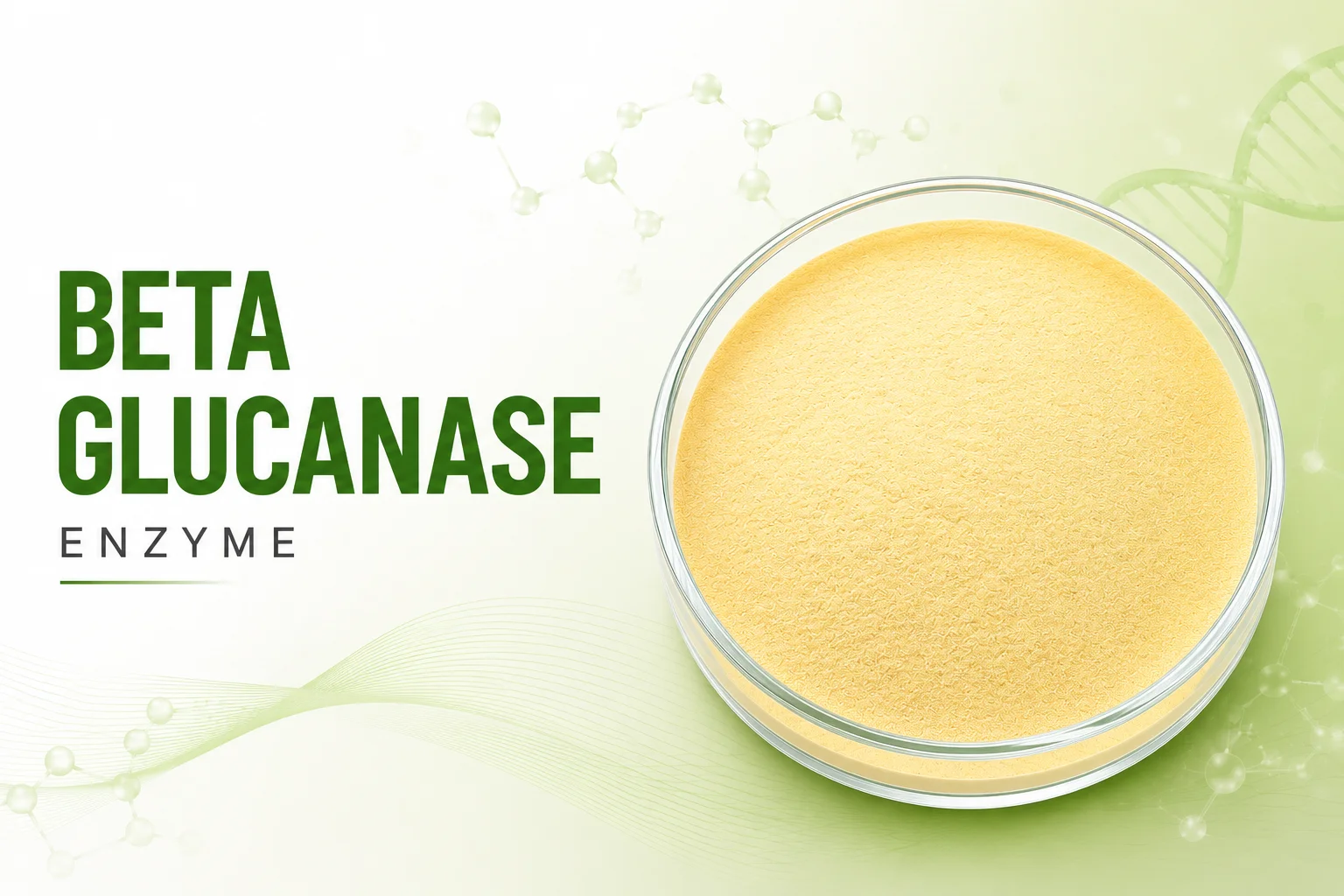
Are you looking for a reliable Beta Glucanase Enzyme Powder supplier for your food processing or industrial manufacturing requirements? Beta glucanase is a specialised carbohydrate-degrading enzyme that breaks down beta-glucans into smaller carbohydrate molecules. Because these complex polysaccharides can increase viscosity in grain-based liquids, the enzyme plays an important role in improving processing efficiency and filtration.
Beta glucans naturally occur in cereal grains such as barley and oats. However, high concentrations can create processing challenges, particularly in brewing, beverage production and food ingredient manufacturing. Beta glucanase addresses these challenges by hydrolysing high-molecular-weight beta-glucans into glucose and other low-molecular-weight polysaccharides.
Leaf CleanTech offers beta glucanase enzyme solutions for food, nutrition and industrial applications. With an application-focused approach, the company helps manufacturers explore suitable enzyme products according to their raw materials, processing conditions and production objectives.
Whether you need a beta glucanase enzyme manufacturer in India, a food-grade enzyme supplier or an enzyme for grain-based processing, Leaf CleanTech can help you explore suitable enzyme solutions for your business.
Why Choose Beta Glucanase Enzyme?
- Breaks down high-molecular-weight beta-glucans into smaller carbohydrate molecules.
- Helps reduce beta-glucan-related viscosity in suitable processing systems.
- Supports filtration and liquid handling in brewing applications.
- Helps improve processing characteristics of grain-based raw materials.
- Supports food, beverage and functional ingredient manufacturing.
- Offers targeted hydrolysis of beta-glucans found in barley and oats.
- Supports application-specific processing through controlled enzyme dosage and operating conditions.
What Is Beta Glucanase Enzyme?
Beta glucanase is a carbohydrate-degrading enzyme that breaks down beta-glucans through enzymatic hydrolysis. Beta-glucans are naturally occurring polysaccharides found in cereal grains such as barley and oats. They contribute to the viscosity and functional properties of several grain-based ingredients.
During food and beverage processing, high concentrations of beta-glucans can increase liquid viscosity and affect filtration. Therefore, manufacturers use beta glucanase to break down these complex carbohydrate structures and improve process handling.
The enzyme acts on beta-glucan linkages and converts large polysaccharide molecules into smaller carbohydrate fragments. Consequently, it helps manage viscosity and supports smoother processing in suitable applications.
In simple terms, beta glucanase converts complex beta-glucan structures into smaller carbohydrates:
Beta Glucans → Smaller Polysaccharides → Glucose and Other Carbohydrate Fragments
The final hydrolysis level depends on enzyme activity, substrate composition, dosage, pH, temperature and reaction time.
How Does Beta Glucanase Enzyme Work?
Beta glucanase works by catalysing the hydrolysis of beta-glucan molecules. This reaction breaks down complex polysaccharide structures into smaller carbohydrate components under suitable processing conditions.
The enzymatic process generally involves the following stages:
- Substrate Contact: First, the enzyme comes into contact with beta-glucan-containing raw materials such as barley, oats or grain-based extracts.
- Enzyme Activation: Suitable pH and temperature conditions help the enzyme perform its carbohydrate-degrading function.
- Beta-Glucan Hydrolysis: Next, the enzyme acts on susceptible linkages within the beta-glucan structure.
- Carbohydrate Breakdown: Large beta-glucan molecules gradually convert into smaller polysaccharides.
- Hydrolysis Completion: Continued enzyme activity can produce smaller carbohydrate fragments and glucose, depending on the enzyme preparation and processing conditions.
Consequently, manufacturers can manage beta-glucan-related viscosity and improve the handling of suitable grain-based liquids. However, the final results depend on raw material composition and processing parameters.
Why Is Beta Glucan Breakdown Important in Food Processing?
Beta-glucans naturally occur in several cereal grains. However, their molecular structure and concentration can influence the viscosity of grain-based liquids. Therefore, managing beta-glucan levels is important in applications that require efficient filtration and material handling.
Brewing is one of the most recognised applications. Barley contains beta-glucans that can increase wort viscosity during mashing and filtration. Similarly, some food and beverage ingredients contain beta-glucans that affect their flow and processing characteristics.
In these situations, beta glucanase offers an enzymatic solution because it breaks down complex beta-glucan molecules. As a result, manufacturers can evaluate improvements in:
- Liquid viscosity management.
- Wort filtration and separation.
- Grain-based ingredient processing.
- Liquid handling and pumping operations.
- Processing consistency.
- Application-specific carbohydrate modification.
Key Benefits of Beta Glucanase Enzyme
Beta glucanase offers several advantages for manufacturers working with cereal grains and beta-glucan-containing raw materials. Moreover, its targeted carbohydrate-degrading activity makes it suitable for specialised food and industrial processing requirements.
1. Effective Beta-Glucan Breakdown
Beta glucanase breaks down high-molecular-weight beta-glucans into smaller carbohydrate molecules. Consequently, it supports manufacturers who need to manage beta-glucan content during grain-based processing.
2. Improved Viscosity Management
High beta-glucan concentrations can increase the viscosity of certain liquids. Therefore, beta glucanase helps reduce the viscosity associated with these polysaccharides under suitable processing conditions.
3. Better Filtration Support
Excess beta-glucans can slow filtration during brewing and other grain-based liquid processing operations. As a result, enzymatic hydrolysis can support smoother filtration and liquid separation.
4. Efficient Grain Processing
Barley and oats contain beta-glucans that can influence processing performance. Beta glucanase targets these carbohydrate structures and supports more manageable grain-processing conditions.
5. Improved Process Handling
Lower beta-glucan-related viscosity can make certain liquids easier to handle during mixing, pumping and filtration. Consequently, manufacturers can evaluate improvements in their production operations.
6. Versatile Industrial Applications
Beta glucanase supports different applications across brewing, food processing, beverage production and animal feed. However, manufacturers should select the appropriate enzyme grade according to their substrate and production requirements.
Applications of Beta Glucanase Enzyme
Beta glucanase has commercial importance because of its ability to hydrolyse complex beta-glucans found in cereal grains. Consequently, manufacturers across different industries can explore its use in applications involving viscosity management, filtration and carbohydrate processing.
1. Beta Glucanase for Brewing Industry
Brewing is one of the major applications of beta glucanase. Barley contains beta-glucans that can increase wort viscosity during mashing and filtration. High viscosity may slow down wort separation and create challenges during the brewing process.
Beta glucanase breaks down these complex carbohydrates into smaller molecules. As a result, it helps manage wort viscosity and supports smoother filtration.
Manufacturers can evaluate beta glucanase for:
- Barley malt processing.
- Wort viscosity management.
- Wort filtration support.
- Grain-based brewing operations.
- Beta-glucan hydrolysis.
- Process consistency improvement.
Furthermore, manufacturers can adjust enzyme dosage and processing conditions according to the beta-glucan content of their raw materials. This flexibility helps brewers evaluate suitable operating conditions for their production systems.
2. Beta Glucanase for Food Processing
Food manufacturers process several cereal-based ingredients that naturally contain beta-glucans. However, high beta-glucan levels can influence viscosity, mixing and material handling.
Potential applications include:
- Processing of barley-based ingredients.
- Oat-based food ingredient processing.
- Beta-glucan modification.
- Functional food ingredient development.
- Grain-based formulation processing.
Additionally, controlled beta-glucan hydrolysis can influence the functional characteristics of selected food ingredients. Therefore, manufacturers should evaluate the enzyme according to their raw material composition and final product requirements.
Explore Food Processing Enzymes.
3. Beta Glucanase for Beverage Processing
Certain grain-based beverages contain beta-glucans that influence liquid viscosity and flow properties. These compounds may create challenges during extraction, filtration and beverage formulation.
Beta glucanase helps hydrolyse these polysaccharides into smaller carbohydrate molecules. Consequently, manufacturers can evaluate improvements in liquid handling and processing characteristics.
Potential application areas include:
- Grain-based beverage production.
- Barley beverage processing.
- Oat-based beverage ingredient processing.
- Viscosity management.
- Carbohydrate modification.
However, the appropriate enzyme dosage and reaction conditions depend on the beverage formulation and the required processing outcome.
4. Beta Glucanase for Animal Feed Applications
Beta glucanase also plays an important role in grain-based animal feed formulations. Cereals such as barley and oats contain beta-glucans that can increase digesta viscosity in certain non-ruminant diets.
Feed-grade beta glucanase helps break down these compounds into smaller carbohydrate fragments. As a result, it supports nutrient utilisation and feed digestibility in suitable formulations.
Potential applications include:
- Poultry feed formulations.
- Swine feed formulations.
- Barley-based animal feed.
- Oat-based feed formulations.
- Grain-based feed processing.
However, food-grade and feed-grade products may have different specifications and application requirements. Manufacturers should select the appropriate product grade before use.
Explore Feed Beta Glucanase Applications.
5. Beta Glucanase for Cereal and Grain Processing
Cereal grains contain several complex carbohydrates, including beta-glucans. During processing, these polysaccharides can influence viscosity and liquid handling. Therefore, beta glucanase provides a targeted solution for breaking down beta-glucan structures.
Manufacturers can explore its use for:
- Barley processing.
- Oat ingredient processing.
- Grain extraction operations.
- Carbohydrate modification.
- Grain-based food ingredient development.
Consequently, beta glucanase can support manufacturers who need to manage beta-glucan-related processing challenges in cereal-based materials.
Beta Glucanase vs Xylanase Enzyme
Beta glucanase and xylanase belong to the carbohydrate-degrading enzyme group. Both target complex plant-based polysaccharides. However, their substrate specificity differs. Beta glucanase acts on beta-glucans, while xylanase breaks down xylans and arabinoxylans.
| Comparison | Beta Glucanase | Xylanase |
|---|---|---|
| Enzyme Category | Carbohydrate-degrading enzyme | Carbohydrate-degrading enzyme |
| Primary Target | Beta-glucans | Xylans and arabinoxylans |
| Main Function | Hydrolyses beta-glucan structures | Hydrolyses xylan structures |
| Target Substrate | Beta-glucan-containing materials | Xylan-containing plant materials |
| Hydrolysis Products | Smaller beta-glucan fragments and carbohydrates | Smaller xylo-oligosaccharides and related sugars |
| Common Applications | Brewing, grain processing, food and feed | Baking, food processing and animal feed |
| Key Selection Factor | Beta-glucan content in the substrate | Xylan and arabinoxylan content |
| Primary Advantage | Targeted beta-glucan breakdown | Targeted xylan breakdown |
The main difference between these enzymes is their target carbohydrate. Therefore, manufacturers should select beta glucanase when their process requires beta-glucan hydrolysis. For applications involving xylan breakdown, xylanase offers a more suitable enzyme solution.
For related applications, explore Leaf CleanTech's:
Beta Glucanase vs Other Fibre-Degrading Enzymes
Different fibre-degrading enzymes target different components of plant cell walls and cereal carbohydrates. For example, beta glucanase acts on beta-glucans, while cellulase targets cellulose. Similarly, hemicellulase and xylanase act on different hemicellulose structures.
| Feature | Beta Glucanase | Cellulase | Hemicellulase | Xylanase |
|---|---|---|---|---|
| Primary Target | Beta-glucans | Cellulose | Hemicellulose | Xylans |
| Enzyme Function | Breaks down beta-glucans | Breaks down cellulose | Hydrolyses hemicellulose components | Breaks down xylan structures |
| Main Substrate | Barley, oats and beta-glucan-containing materials | Cellulose-rich plant materials | Plant cell wall materials | Xylan-containing plant materials |
| Common Applications | Brewing, food and feed processing | Food, fibre and feed processing | Food, baking and feed processing | Baking, food and feed processing |
| Key Processing Benefit | Beta-glucan viscosity management | Cellulose breakdown | Hemicellulose breakdown | Arabinoxylan and xylan breakdown |
| Selection Factor | Beta-glucan concentration | Cellulose content | Hemicellulose composition | Xylan content |
Although these enzymes support plant-based material processing, their substrate specificity differs. Consequently, manufacturers should identify the main carbohydrate component before selecting an enzyme.
Explore related fibre-degrading enzymes:
Factors Affecting Beta Glucanase Enzyme Performance
Enzyme activity depends on several processing parameters. Therefore, manufacturers should understand these factors before using beta glucanase in commercial production.
1. Substrate Composition
The beta-glucan content of the raw material directly influences enzyme requirements. For example, barley and oats can contain different levels of beta-glucans. Consequently, manufacturers should evaluate the substrate before selecting an enzyme dosage.
2. pH Level
The pH of the processing environment influences enzyme activity and stability. Therefore, manufacturers should identify the recommended pH range for their specific beta glucanase preparation.
3. Processing Temperature
Temperature influences reaction speed and enzyme stability. Although increasing temperature within a suitable range can accelerate enzymatic reactions, excessive heat may reduce enzyme activity. Therefore, maintain the recommended operating temperature.
4. Enzyme Dosage
The required beta glucanase dosage depends on substrate concentration, enzyme activity and the desired level of hydrolysis. Moreover, using more enzyme does not automatically produce better results.
5. Reaction Time
Reaction time determines how long the enzyme interacts with beta-glucan molecules. However, processing requirements vary across brewing, food and beverage applications. Therefore, manufacturers should monitor the reaction and adjust processing time according to the desired outcome.
6. Mixing and Substrate Accessibility
Effective mixing helps distribute the enzyme throughout the processing material. Consequently, it improves enzyme contact with the substrate. Manufacturers should also consider the physical characteristics of the raw material and the accessibility of beta-glucan structures.
How to Use Beta Glucanase Enzyme in Food Processing
Correct enzyme application helps manufacturers achieve consistent beta-glucan hydrolysis. However, dosage and processing conditions vary according to the raw material and final product requirements.
Step 1: Identify the Raw Material
First, identify the raw material and its beta-glucan content. Barley, oats and other cereal ingredients may contain different beta-glucan concentrations. This information helps determine the enzyme requirement.
Step 2: Check the Processing Conditions
Next, measure the pH and temperature of your production environment. Beta glucanase requires suitable operating conditions to perform effectively.
Step 3: Determine the Enzyme Dosage
Calculate the required enzyme quantity based on substrate concentration, enzyme activity and desired hydrolysis level. Always follow the manufacturer's technical recommendations.
Step 4: Add the Enzyme at the Appropriate Stage
Apply the enzyme during the appropriate processing stage. For brewing applications, manufacturers commonly evaluate enzyme addition during mashing or another suitable stage of grain processing.
Step 5: Maintain the Correct Temperature
Maintain the recommended temperature throughout the enzymatic reaction. Additionally, avoid excessive heating because high temperatures may reduce enzyme activity.
Step 6: Monitor the Processing Results
Finally, assess viscosity, filtration performance and other application-specific characteristics. Adjust processing parameters according to the results.
For commercial manufacturing, laboratory and pilot-scale trials can help establish suitable enzyme dosage and operating conditions.
How to Choose the Right Beta Glucanase Enzyme Supplier
Selecting a reliable beta glucanase enzyme supplier is important for maintaining consistent production quality. However, businesses should evaluate more than product availability and pricing. The supplier's technical knowledge, product specifications and application support also matter.
1. Enzyme Activity and Specifications
First, review enzyme activity, product form and technical specifications. These details help determine whether the product matches your manufacturing requirements.
2. Application Suitability
The supplier should understand your raw materials and processing conditions. Moreover, technical guidance can help you evaluate enzyme suitability for brewing, food processing or other industrial applications.
3. Quality Documentation
Review the technical datasheet, certificate of analysis and relevant quality documentation. Additionally, confirm that the product meets the regulatory requirements for your intended application.
4. Consistent Product Supply
Commercial manufacturers need dependable product availability and suitable packaging options. Therefore, discuss minimum order quantities, supply schedules and storage requirements before placing an order.
5. Technical Assistance
Enzyme performance depends on pH, temperature, dosage and reaction time. Consequently, technical assistance can help manufacturers evaluate application conditions and achieve more consistent results.
6. Customised Enzyme Formulations
Some industrial processes require specialised enzyme combinations. In such cases, a supplier with customised formulation capabilities can help businesses explore application-specific solutions.
Why Choose Leaf CleanTech for Beta Glucanase Enzyme?
Leaf CleanTech develops enzyme solutions for food, nutrition, biotechnology and animal feed applications. With an application-focused approach, the company helps manufacturers explore suitable enzyme products according to their raw materials and production requirements.
Application-Focused Enzyme Solutions
Different manufacturing processes require different enzyme activities. Therefore, Leaf CleanTech focuses on matching enzyme solutions to specific substrates and processing conditions.
Industrial Biotechnology Expertise
Leaf CleanTech combines biotechnology knowledge with enzyme development to support commercial and industrial manufacturing requirements.
Consistent Quality Approach
Enzyme activity and product consistency influence processing performance. Consequently, the company focuses on dependable enzyme solutions for industrial applications.
Customised Enzyme Formulations
Standard enzyme products may not address every production challenge. Therefore, Leaf CleanTech offers customised formulation capabilities for specialised processing requirements.
Technical Application Support
Enzyme selection requires an understanding of raw materials, pH, temperature and reaction time. Leaf CleanTech can help customers evaluate these factors when selecting suitable enzyme solutions.
Wide Food Enzyme Portfolio
In addition to beta glucanase, Leaf CleanTech offers amylases, cellulases, hemicellulases, xylanases, pectinases, lactase, lipase, invertase, bromelain, papain and other specialised enzyme products.
Related Food Processing Enzymes from Leaf CleanTech
Beta glucanase is one of several enzymes used in food and industrial processing. Depending on your production requirements, other enzyme products may also support your manufacturing operations.
Fibre-Degrading Enzymes
Fibre-degrading enzymes help break down different plant cell wall components and complex carbohydrates.
Carbohydrate Processing Enzymes
Carbohydrate-processing enzymes help break down starches and complex sugars into smaller components.
Protease Enzymes
Protease enzymes support protein hydrolysis and protein modification across different industrial applications.
Other Food Processing Enzymes
Industries That Use Beta Glucanase Enzyme
Beta glucanase supports several industrial sectors where beta-glucan breakdown and viscosity management are important. However, each industry has specific product and processing requirements.
Food and Nutrition Industry
Food manufacturers can explore beta glucanase for cereal processing, functional food ingredient modification and selected grain-based food applications.
Brewing Industry
Brewers use beta glucanase to break down beta-glucans in barley-based materials. This process can support wort viscosity management and filtration.
Beverage Manufacturing
Beverage manufacturers can evaluate beta glucanase for processing grain-based ingredients and managing beta-glucan-related viscosity.
Animal Feed Industry
Feed manufacturers can use suitable feed-grade beta glucanase formulations to break down beta-glucans in barley- and oat-based feed ingredients.
Grain Processing Industry
Grain processors can evaluate beta glucanase for hydrolysing beta-glucans in cereal-based raw materials and improving selected processing characteristics.
Frequently Asked Questions About Beta Glucanase Enzyme
1. What is Beta Glucanase Enzyme?
Beta glucanase is a carbohydrate-degrading enzyme that breaks down beta-glucans into smaller carbohydrate molecules. These polysaccharides naturally occur in cereal grains such as barley and oats.
2. What is Beta Glucanase used for?
Beta glucanase is used in brewing, food processing, beverage manufacturing, grain processing and selected animal feed applications. It helps hydrolyse beta-glucans and manage viscosity in suitable processing systems.
3. How does Beta Glucanase work?
Beta glucanase catalyses the hydrolysis of beta-glucan molecules. As a result, large polysaccharide structures break down into smaller carbohydrate fragments and glucose, depending on the enzyme preparation and processing conditions.
4. What is the difference between Beta Glucanase and Xylanase?
The main difference is their target substrate. Beta glucanase breaks down beta-glucans, whereas xylanase acts on xylans and arabinoxylans. Therefore, manufacturers should select the enzyme according to the carbohydrate present in their raw material.
5. Can Beta Glucanase reduce viscosity?
Yes. Beta glucanase breaks down high-molecular-weight beta-glucans into smaller carbohydrate molecules. Consequently, it can reduce the viscosity associated with beta-glucans in suitable food and beverage processing systems.
6. Which industries use Beta Glucanase Enzyme?
Beta glucanase has applications in brewing, food processing, beverage manufacturing, grain processing and animal feed production. Its suitability depends on the raw material, enzyme grade and operating conditions.
7. What raw materials contain Beta Glucans?
Beta-glucans naturally occur in several cereal grains, particularly barley and oats. Their concentration varies according to the grain variety, growing conditions and processing method.
8. Can Beta Glucanase improve brewing filtration?
Yes. Beta glucanase breaks down beta-glucans in barley-based brewing materials. This action can reduce wort viscosity and support smoother filtration during brewing.
9. What factors affect Beta Glucanase activity?
Important factors include substrate composition, beta-glucan concentration, pH, temperature, enzyme dosage, mixing and reaction time. Therefore, manufacturers should optimise these parameters through application trials.
10. Can Beta Glucanase be used in animal feed?
Yes. Feed-grade beta glucanase helps break down beta-glucans in grain-based feed ingredients. It can support nutrient utilisation and digestibility in suitable feed formulations.
11. What is the difference between Beta Glucanase and Cellulase?
Beta glucanase targets beta-glucans, while cellulase breaks down cellulose. Although both enzymes act on carbohydrate structures, they target different substrates and support different processing requirements.
12. How do I select the right Beta Glucanase dosage?
The correct dosage depends on enzyme activity, beta-glucan concentration, substrate characteristics, pH, temperature and desired hydrolysis level. Manufacturers should conduct laboratory or pilot-scale trials before establishing commercial dosage.
13. Does Leaf CleanTech supply Beta Glucanase Enzyme Powder?
Yes. Leaf CleanTech offers beta glucanase as part of its enzyme portfolio and supports commercial and industrial customers looking for application-specific enzyme solutions.
14. How can I purchase Beta Glucanase Enzyme Powder from Leaf CleanTech?
You can contact Leaf CleanTech through its website, phone or email. Share your application, estimated quantity and technical requirements to request product information and a commercial quotation.
Phone: +91 80 4114 4713
Email: info@leafcleantech.com
Find the Right Beta Glucanase Enzyme for Your Business
Choosing the right beta glucanase enzyme can support efficient beta-glucan hydrolysis and improved processing characteristics. However, every manufacturing process has different requirements. Therefore, businesses should evaluate enzyme activity, raw material composition, pH, temperature and reaction time before selecting a suitable product.
Leaf CleanTech offers beta glucanase enzyme solutions for food, nutrition and industrial processing applications. Moreover, its application-focused approach helps manufacturers explore suitable enzyme options according to their production objectives.
Whether you need an enzyme for brewing, food ingredient manufacturing or grain-based processing, Leaf CleanTech can help you evaluate the right solution.
Connect with the team to discuss your enzyme requirements and explore suitable commercial options.
Looking for a Beta Glucanase Enzyme Supplier?
Explore Beta Glucanase Enzyme Powder solutions from Leaf CleanTech for brewing, food processing, beverage manufacturing and grain-based applications. Contact our team to discuss your application requirements and request a commercial quotation.
Explore Food and Nutrition Enzymes
Request a Beta Glucanase Enzyme Quote
Leaf CleanTech Pvt. Ltd.
#371 & 372, 10th Cross, 4th Phase,
Peenya Industrial Area, Bengaluru – 560058, India.
Phone: +91 80 4114 4713
Email: info@leafcleantech.com
Protease enzyme manufacturer India - Leaf CleanTech
May 11, 2026[…] CleanTech's food enzyme portfolio includes proteases alongside enzymes such as xylanase, cellulase, beta-glucanase, pectinase, lactase, lipase, invertase, bromelain and […]