
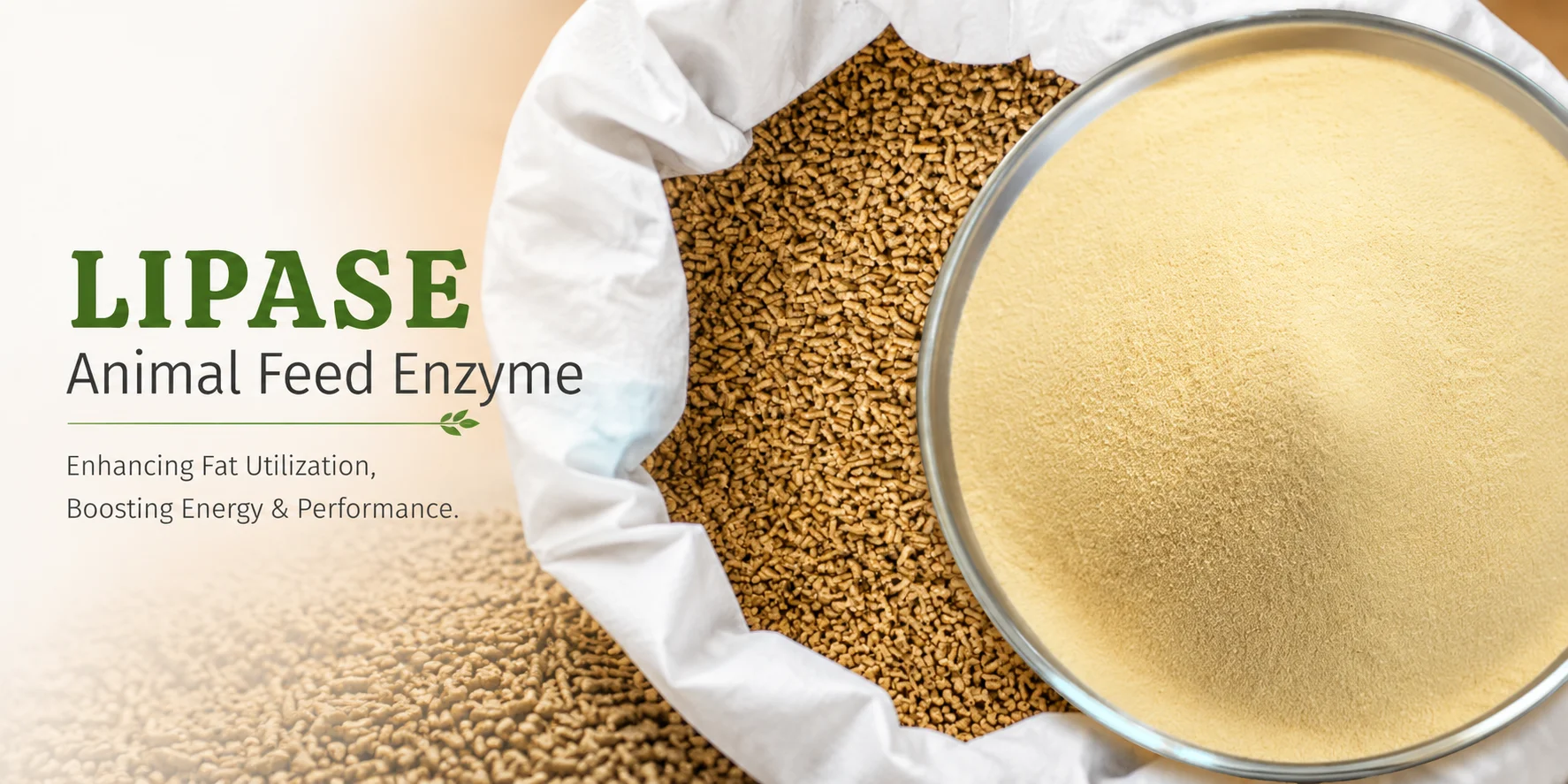
Fats and oils provide concentrated energy in animal diets. However, animals must break down these fats before they can absorb and use their components efficiently. This is where the lipase animal feed enzyme plays an important role. Lipase catalyses the breakdown of dietary fats into fatty acids and glycerol, supporting fat digestion under suitable conditions.
Feed manufacturers use fats and oils to formulate diets that meet animals' energy requirements. Nevertheless, fat utilisation depends on several factors, including animal age, fat source, feed composition and digestive function. Therefore, understanding lipase activity can help nutritionists evaluate its potential role in specific feed formulations.
In this guide, we explain what lipase is, how it works, its potential applications, product specifications and the factors to consider when choosing a feed-grade enzyme. We also explore related enzyme solutions from Leaf CleanTech.
Lipase is an enzyme that breaks down fats and oils into fatty acids and glycerol. In suitable animal feed applications, supplemental lipase may support fat digestion, particularly when dietary fat utilisation presents a challenge. Its effectiveness depends on the product, animal species, feed composition and application conditions.
What Is Lipase Animal Feed Enzyme?
Lipase belongs to a group of enzymes that catalyse the hydrolysis of fats, also known as lipids. These fats occur in ingredients such as vegetable oils, animal fats and other energy-rich feed components. During digestion, lipase acts on suitable fat molecules and releases fatty acids and glycerol or related lipid breakdown products.
Animals naturally produce digestive lipases. However, fat digestion can vary with age, diet composition, fat source and digestive development. Consequently, feed formulators may consider supplemental lipase when they want to address a specific fat-digestion requirement.
Leaf CleanTech lists LEAFLIPE as its lipase enzyme for animal feed applications. Before selecting this product, confirm its current specification and suitability for your intended formulation.
How Does Lipase Work in Animal Feed?
Dietary fats contain triglycerides, which consist of glycerol linked to fatty acids. Lipase catalyses the breakdown of these fat molecules by hydrolysing their ester bonds. As a result, the reaction releases free fatty acids and other lipid products that participate in normal fat digestion and absorption.
The animal consumes feed containing fats or oils that provide a concentrated source of energy.
Lipase acts on suitable fat molecules and catalyses their breakdown under appropriate conditions.
The reaction releases fatty acids and other lipid products that can participate in digestion and absorption.
However, lipase does not work in isolation. Bile salts, intestinal conditions, fat composition and other digestive processes also influence fat utilisation. Therefore, supplemental lipase should form part of a broader nutritional strategy rather than replace sound feed formulation.
Why Is Lipase Important in Animal Nutrition?
Supports Fat Digestion
Lipase breaks down suitable dietary fats into smaller lipid components. Therefore, it may help address specific fat-digestion challenges when the product matches the application.
Targets Energy-Rich Ingredients
Fats and oils supply concentrated dietary energy. Lipase helps break down these components, making it relevant to formulations that include added fats.
Supports Formulation Evaluation
Feed nutritionists can assess supplemental lipase when they need to address the digestion of particular fat sources or evaluate specialised feed formulations.
Complements Other Enzymes
Lipase targets fats, whereas proteases and carbohydrate-degrading enzymes target different substrates. Consequently, each enzyme can serve a distinct role in a suitable formulation.
Key Applications of Lipase Animal Feed Enzyme
1. Fat Digestion Support
Lipase may support fat digestion in feed formulations where the target animal and dietary conditions suit supplemental enzyme use. By hydrolysing suitable lipids, it helps break down dietary fats into smaller components.
Nevertheless, the response varies with fat type, inclusion level, animal physiology and the enzyme preparation. Therefore, nutritionists should assess the formulation before deciding whether supplemental lipase offers a practical benefit.
2. Young Animal Nutrition
Young animals experience changes in digestive function as they grow. Their ability to utilise dietary fats also depends on species, age, diet composition and digestive development. As a result, nutritionists may evaluate supplemental lipase in selected starter-feed formulations.
However, young animals do not all have the same digestive limitations. Consequently, feed manufacturers should base enzyme selection on the target species and relevant application evidence rather than assume every young animal requires additional lipase.
3. Feed Formulations Containing Added Fats
Many animal diets contain added vegetable oils or other fats to meet energy requirements. Since these ingredients differ in their fatty acid composition and physical properties, their digestion can also vary.
Feed formulators can evaluate lipase when a particular fat source or dietary strategy presents a reason to consider additional lipolytic activity. In addition, they should check the enzyme's activity profile and compatibility with the manufacturing process.
4. Poultry Feed Applications
Poultry diets often use oils and fats to increase dietary energy density. Lipase may be considered for selected formulations where fat digestion requires further evaluation. Nevertheless, the outcome depends on bird age, fat source, feed composition and the product's characteristics.
For a complete nutritional approach, manufacturers can also evaluate other enzymes according to the feed's protein, starch, fibre and phytate content.
5. Pig Feed Applications
Pig feed formulations can include fats and oils to meet energy requirements at different growth stages. Nutritionists may assess lipase when the diet, animal stage and fat source justify additional fat-digesting enzyme activity.
At the same time, other enzymes may address different formulation needs. For example, acid protease and neutral protease target proteins rather than fats.
Lipase vs Other Animal Feed Enzymes
Each enzyme targets a particular substrate. Therefore, choosing the right product begins with identifying the component that requires enzymatic breakdown. The following table compares lipase with common enzymes used in feed formulations.
| Enzyme | Target Substrate | Primary Function | Potential Application Focus |
|---|---|---|---|
| Lipase | Fats and oils | Hydrolyses lipids into fatty acids and other breakdown products | Selected fat-containing feed formulations |
| Protease | Proteins | Breaks proteins into smaller peptides | Protein digestion and formulation |
| Amylase | Starch | Breaks starch into smaller carbohydrates | Starch-containing feed ingredients |
| Cellulase | Cellulose | Acts on structural plant carbohydrates | Selected fibrous feed ingredients |
| Xylanase | Xylan | Breaks down selected plant cell-wall polysaccharides | Suitable cereal-based formulations |
| Phytase | Phytate | Releases phosphorus from phytate | Plant-based diets where phytate-bound phosphorus matters |
| Alpha-Galactosidase | Selected plant oligosaccharides | Breaks down compounds such as raffinose and stachyose | Formulations containing suitable legume ingredients |
Lipase cannot replace protease, amylase or other enzymes because each enzyme performs a different catalytic function. Instead, manufacturers should choose products according to the feed's composition and the intended nutritional objective.
Explore the animal feed enzyme range to learn about additional enzyme options from Leaf CleanTech.
LEAFLIPE Lipase Enzyme: Product Specifications
Leaf CleanTech lists LEAFLIPE as a feed-grade lipase powder. The product information on the current page includes the following specifications. Confirm the latest technical details with the supplier before ordering.
| Specification | Listed Details |
|---|---|
| Product name | LEAFLIPE |
| Enzyme type | Lipase |
| Product form | Feed-grade powder |
| Listed activity | 5000 U/g |
| Packaging | 25 kg pack |
| Minimum order quantity | 25 kg |
| Listed shelf life | 6 months |
The product page describes an animal-derived source for LEAFLIPE. Therefore, buyers should confirm the current source, processing details, activity assay, storage conditions and feed-use suitability with Leaf CleanTech, particularly when their formulation or purchasing requirements specify an enzyme origin.
Visit the LEAFLIPE lipase animal feed enzyme page to review product details and make an enquiry.
How to Select Lipase for Animal Feed
Choosing a lipase enzyme requires more than checking the product name. Instead, assess the feed composition, intended animal, enzyme activity and manufacturing conditions together.
1. Assess the Fat Source
First, identify the fats and oils in your formulation. Their composition and physical properties can influence digestion and the suitability of an enzyme preparation.
2. Check Enzyme Activity
Next, review the declared activity units and test method. Different products may use different assays, so compare specifications carefully before drawing conclusions about their relative strength.
3. Consider Animal Species and Age
Digestive physiology varies among poultry, pigs, cattle and other animals. Similarly, young animals and mature animals may respond differently to dietary fats. Therefore, choose a product that suits the target species and application.
4. Review Feed Processing Conditions
Feed manufacturing can expose enzymes to heat, moisture and other conditions that influence activity. In addition, storage and handling can affect product stability. Check the supplier's recommendations before introducing the enzyme into the production process.
5. Follow Product-Specific Dosage Guidance
Determine the inclusion rate using the product's technical guidance and the requirements of the formulation. Avoid using a universal dosage because enzyme preparations, activity levels and applications can differ.
6. Monitor the Intended Outcome
Finally, establish a suitable baseline and evaluate relevant results. Depending on the application, this may include fat utilisation, feed quality or animal performance indicators. This approach helps determine whether the enzyme meets the intended objective.
Supplemental lipase does not guarantee improved growth, feed conversion or energy absorption in every diet. Evaluate its suitability using product-specific guidance and appropriate evidence for the target animal and formulation.
Can Lipase Be Combined with Other Feed Enzymes?
Yes. Some formulations use multiple enzymes because feed contains different types of nutrients. For example, lipase targets fats, protease targets proteins, and amylase acts on starch. Consequently, an enzyme combination may address several formulation objectives when each activity serves a clear purpose.
However, adding more enzymes does not automatically improve results. Manufacturers should consider enzyme compatibility, processing stability, dosage and the presence of each target substrate. They should also verify that the combination suits the target species and feed formulation.
For protein-related applications, explore acid protease and neutral protease. For plant-derived carbohydrate challenges, review feed cellulase and feed beta-glucanase.
Why Choose Leaf CleanTech for Feed Enzyme Solutions?
Leaf CleanTech develops enzyme solutions for animal feed, food and nutrition, and industrial fermentation applications. Its portfolio includes several enzyme categories that target different feed components and processing requirements.
- Specialised enzyme portfolio: Explore lipase alongside protease, amylase, cellulase, xylanase, phytase and other enzymes.
- Application-focused discussions: Share your raw materials, target substrate and processing conditions when evaluating an enzyme.
- Product specification review: Confirm activity, packaging, storage and other technical requirements before purchasing.
- Custom formulation enquiries: Discuss specialised enzyme requirements with the team where applicable.
Learn more about Leaf CleanTech or explore the complete animal feed enzyme portfolio.
Related Feed Enzyme Resources
Each enzyme addresses a different component of feed. Therefore, reviewing related products can help you build a clearer understanding of the options available for your formulation.
Frequently Asked Questions About Lipase Animal Feed Enzyme
1. What is lipase animal feed enzyme?
Lipase animal feed enzyme is a fat-digesting enzyme that catalyses the breakdown of dietary lipids. It helps hydrolyse suitable fats into fatty acids and other lipid products.
2. What does lipase do in animal feed?
Lipase acts on fats and oils in feed. Depending on the formulation and application, supplemental lipase may support fat digestion when the enzyme suits the target animal and feed conditions.
3. Why is lipase important for fat digestion?
Dietary fats need to undergo digestion before the animal can absorb their components. Lipase catalyses the hydrolysis of suitable fats and contributes to this digestive process.
4. Can lipase be used in poultry feed?
Lipase may be evaluated for selected poultry formulations containing added fats or oils. However, suitability depends on the bird's age, fat source, enzyme specifications and application evidence.
5. Is lipase useful in young animal nutrition?
Nutritionists may evaluate supplemental lipase for young animals when the diet and digestive development justify it. However, requirements differ by species, age and feed composition.
6. What is the difference between lipase and protease?
Lipase targets fats and oils, while protease breaks down proteins. Therefore, the two enzymes perform different functions and may serve complementary roles in an appropriately designed formulation.
7. Can lipase be combined with other enzymes?
Yes, some formulations combine lipase with enzymes such as protease or amylase to target different substrates. Nevertheless, manufacturers should evaluate compatibility, dosage and application suitability.
8. What is the activity of LEAFLIPE lipase enzyme?
The Leaf CleanTech product page lists LEAFLIPE at 5000 U/g. Confirm the current specification and activity test method with the supplier before purchasing.
9. How should lipase be stored?
Follow the product-specific storage instructions supplied by the manufacturer. Temperature, moisture and handling can affect enzyme stability, so check the label and technical documentation.
10. Where can I enquire about lipase animal feed enzyme?
Visit the LEAFLIPE lipase product page or contact Leaf CleanTech to discuss specifications, availability and application requirements.
Find the Right Lipase Feed Enzyme
Choosing a suitable enzyme starts with understanding your feed ingredients, target animal and processing conditions. Explore LEAFLIPE and discuss your technical requirements with Leaf CleanTech to evaluate whether this lipase solution fits your application.