
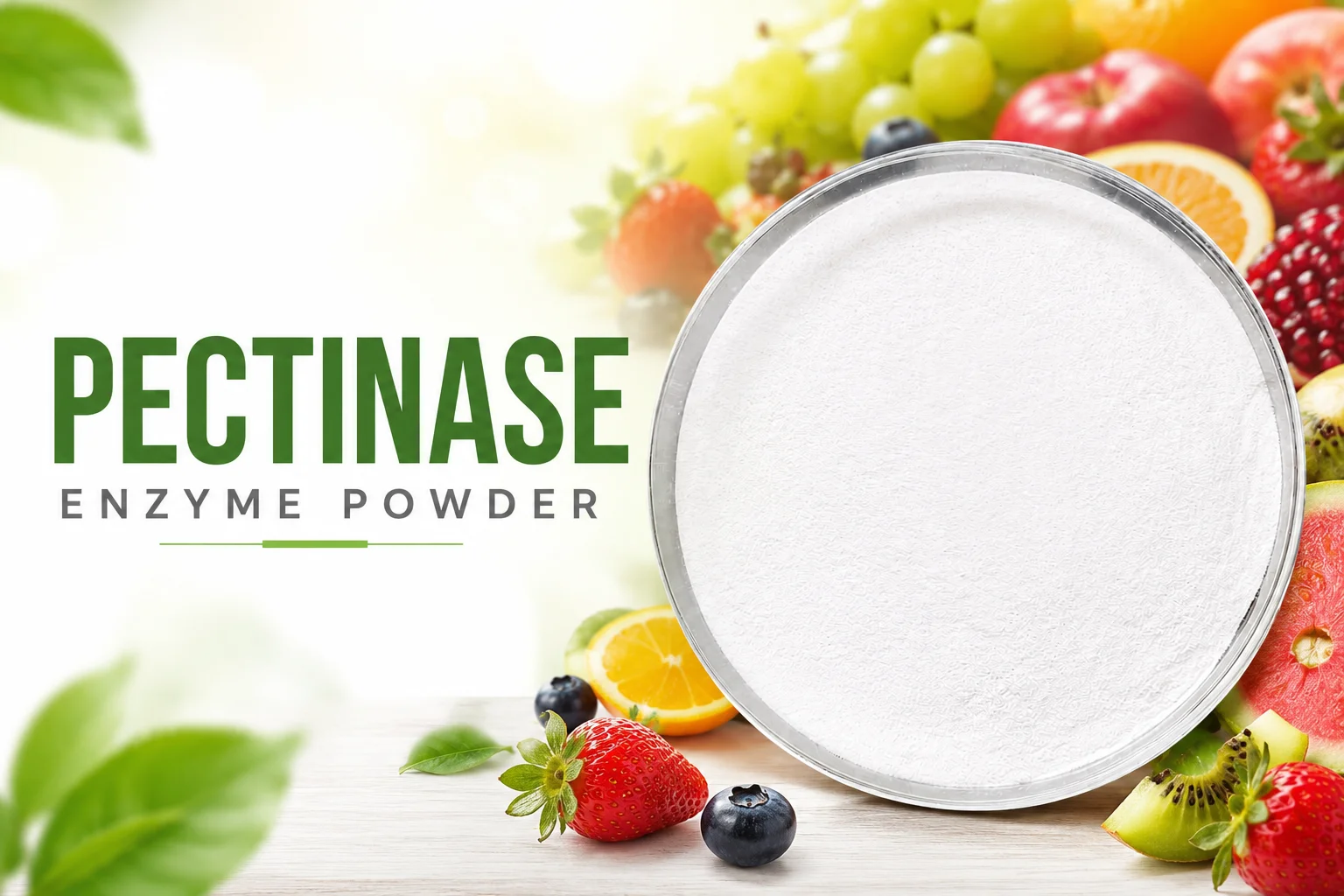
Looking for pectinase enzyme powder for fruit and vegetable processing? Pectinase is an enzyme that breaks down pectin, a structural polysaccharide found in plant cell walls. In suitable processing conditions, it can help reduce pulp viscosity, support juice extraction and improve clarification.
Leaf CleanTech offers LEAFPECT, a pectolytic enzyme solution for fruit and vegetable processing applications. Explore its potential uses in juice production, fruit pulp treatment and other suitable processes. Contact our team to confirm the product specifications for your application.
Pectinase is a group of enzymes that break down pectin, a complex carbohydrate found in the cell walls and middle lamella of many fruits and vegetables. Pectin contributes to the structure of plant tissues and can increase the viscosity of fruit pulp and juice.
During fruit processing, pectin can make extraction and filtration more challenging. Pectinase hydrolyses specific pectin structures, helping to modify the pulp and juice matrix. Depending on the fruit, process and enzyme preparation, this can support juice extraction, viscosity reduction and clarification.
Pectinase enzyme powder is relevant to manufacturers processing fruit juices, concentrates, purees and other plant-based products. However, the results depend on the fruit variety, ripeness, pectin content, enzyme activity, dosage, pH, temperature and reaction time.
Leaf CleanTech lists LEAFPECT in its food-enzyme portfolio. Explore the food and nutrition enzyme range to discover solutions for different food-processing needs.
Pectinase can support several fruit-processing objectives by breaking down pectin in plant materials. Its performance should be evaluated against the requirements of each production process.
Pectin breakdown can help release juice from suitable fruit pulp. The effect on extraction yield depends on the fruit and the processing method.
By modifying pectin structures, pectinase can reduce pulp viscosity in suitable applications and support downstream handling.
Pectin degradation can support clarification and filtration by changing the properties of the juice matrix.
Optimised enzyme treatment may support extraction and filtration operations. Actual results should be confirmed through process trials.
Pectinase is used in fruit and vegetable processing where pectin affects extraction, viscosity or clarification. The most suitable application depends on the raw material and the characteristics of the enzyme preparation.
Fruit tissues contain pectin that helps maintain their structure. Pectinase can break down this material during suitable processing conditions, helping release juice from the pulp. Manufacturers should evaluate extraction yield, processing time and final juice quality when selecting the treatment conditions.
Pectin can contribute to juice viscosity and make clarification more difficult. Pectinase treatment modifies pectin and can support clarification and filtration in suitable juice systems. The final result depends on the fruit type, pulp composition and downstream clarification method.
Pectinase can help modify fruit pulp by breaking down pectin. Depending on the process, this may improve pulp handling and facilitate subsequent separation or extraction stages. However, manufacturers should assess the impact on texture and product yield before adopting the treatment.
Fruit concentrate production may involve extraction, clarification and concentration steps. Pectinase can support upstream juice processing where pectin causes high viscosity or filtration challenges. The enzyme should be selected according to the intended fruit and processing conditions.
Certain vegetable-processing operations can also benefit from pectin modification. Depending on the raw material, pectinase may help with tissue breakdown, extraction or separation. Application trials are important because different vegetables have different cell-wall compositions.
Manufacturers of fruit preparations and other fruit-based ingredients may evaluate pectinase when viscosity, pulp handling or separation affects production. The enzyme treatment must match the desired final texture and product characteristics.
Pectinase refers to enzymes that act on pectin through different mechanisms. Depending on the enzyme preparation, these activities can break down the pectin backbone or modify specific chemical groups. This changes the structure and properties of pectin in fruit and vegetable materials.
During juice processing, pectin degradation can reduce the viscosity of the pulp or juice. As a result, extraction, clarification or filtration may become easier under suitable conditions. Nevertheless, not all pectinase products have the same enzyme activities, so the grade should match the process.
Before selecting pectinase enzyme powder, review the product's activity, physical form, recommended operating conditions and quality documentation. Confirm the details for LEAFPECT with Leaf CleanTech before commercial use.
| Parameter | Details |
|---|---|
| Product name | Pectinase Enzyme Powder |
| Product code | LEAFPECT |
| Enzyme category | Pectolytic enzyme |
| Primary function | Breakdown of pectin in suitable plant-based materials |
| Potential applications | Fruit and vegetable processing, juice extraction, pulp treatment and clarification |
| Enzyme activity | Confirm the activity value, units and test method with Leaf CleanTech |
| Physical form | Confirm the available form for the supplied grade |
| Operating pH | Confirm the recommended range on the current technical data sheet |
| Operating temperature | Confirm the recommended range for the selected application |
| Dosage | Determine through application trials and supplier guidance |
| Packaging | Confirm available packaging options with the supplier |
| Storage and shelf life | Follow the approved product label and technical data sheet |
Note: This table is a product selection guide, not a certified specification. Request the current technical data sheet and certificate of analysis before purchasing or using the enzyme.
Choosing a pectinase product involves more than comparing activity values. You should also consider the raw material, processing objective and final-product requirements. A structured evaluation can help identify suitable operating conditions.
Different fruits contain different levels and types of pectin. Select an enzyme based on your specific raw material.
Decide whether you need improved extraction, lower viscosity, easier filtration or juice clarification.
Review the enzyme activity and recommended operating conditions in the current product documentation.
Test the selected enzyme under controlled conditions and measure yield, clarity, viscosity and product quality.
Leaf CleanTech develops enzyme solutions for Food & Nutrition, Animal Feed and Fermentation applications. Its food-enzyme portfolio includes pectinase and other enzymes for different industrial processing requirements.
Share your raw material and production goals to help identify an enzyme solution suited to your process.
Explore pectinase alongside enzymes for protein, starch, fibre and other food-processing applications.
Request product documentation to assess enzyme activity and suitability for your processing conditions.
Discuss customised enzyme solutions if your production process requires a combination of enzyme activities.
Explore the complete food and nutrition enzyme portfolio , or learn about food grade cellulase enzyme for other plant-fibre processing applications.
Pectinase enzyme powder is used in suitable fruit and vegetable processing applications. It breaks down pectin and can support juice extraction, pulp viscosity reduction and clarification.
Pectinase breaks down pectin in fruit tissues. Under suitable conditions, this can help release juice from the pulp and improve extraction performance. The result depends on the fruit and processing method.
Yes, suitable pectinase treatment can support juice clarification by modifying pectin and reducing viscosity. The final clarity also depends on the juice composition and downstream filtration or clarification process.
Pectinase helps break down pectin in fruit materials. Depending on the application, this can support pulp treatment, juice extraction, viscosity reduction and clarification.
Activity depends on the enzyme preparation, pH, temperature, dosage, reaction time and pectin characteristics of the raw material. Follow the current technical data sheet.
LEAFPECT is the pectolytic enzyme product listed in Leaf CleanTech's food-enzyme portfolio for fruit and vegetable processing. Contact the company to confirm its current specifications and availability.
Dosage depends on the fruit type, pectin content, enzyme activity and processing conditions. Conduct controlled application trials and follow the supplier's recommendations.
Contact Leaf CleanTech with your application, raw material and process requirements. Request the latest technical data sheet, enzyme activity details and relevant quality documents.
Tell us about your fruit or vegetable raw material, processing conditions and production goals. Leaf CleanTech can help you evaluate suitable pectinase solutions and confirm the product specifications for your application.
[…] Pectinase, which lowers pulp viscosity for higher juice yield […]
[…] when raw materials contain multiple structural components. For example, xylanase, hemicellulase and pectinase can complement cellulase in selected food-processing […]
©2026. Leaf CleanTech - All Rights Reserved.
Industrial Biotechnology Applications - Leaf CleanTech
June 4, 2026[…] example, proteases can support protein hydrolysis, while enzymes such as pectinases can be used in fruit and vegetable processing. Xylanase and other enzyme systems can support […]