
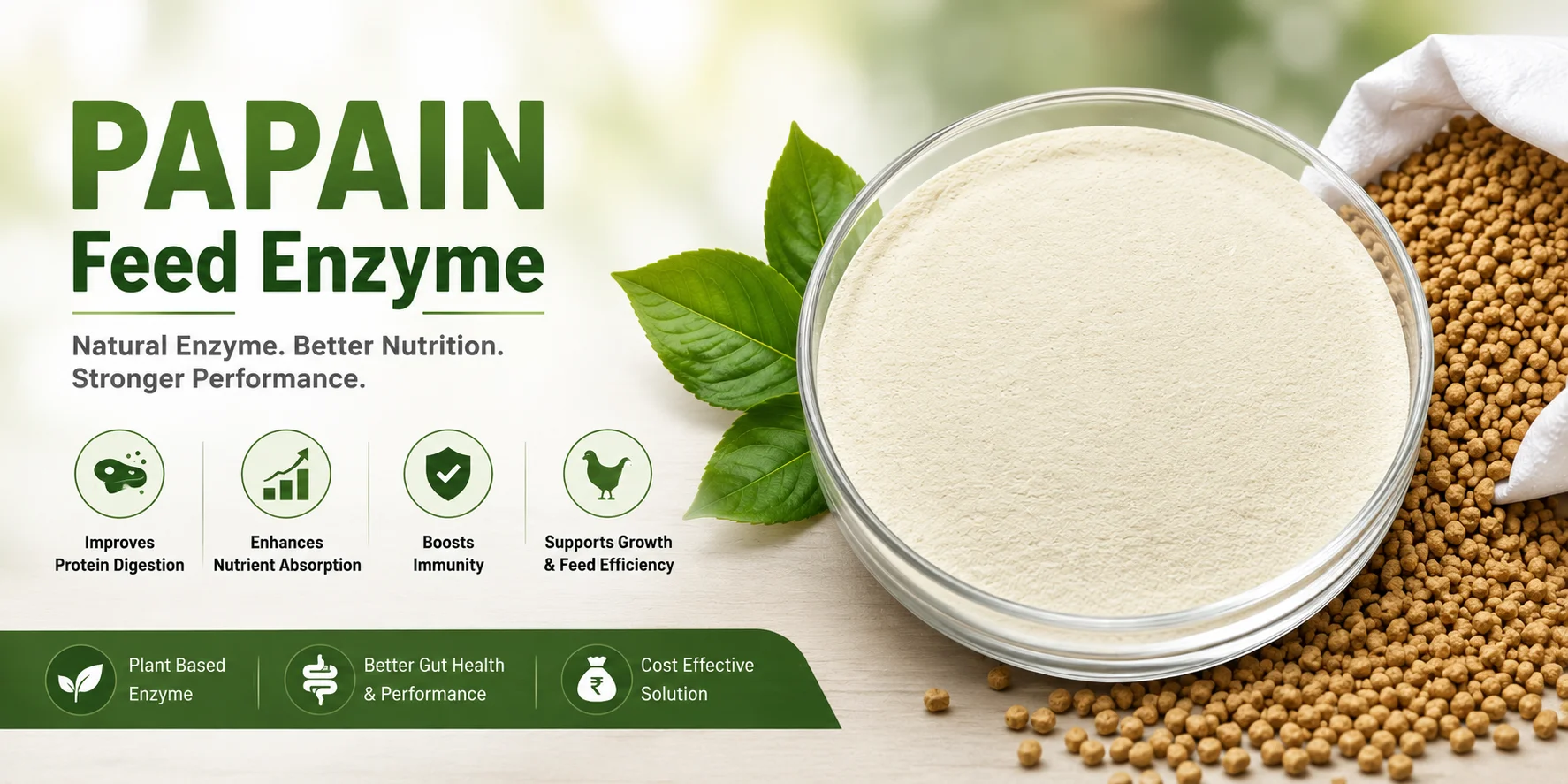
Protein plays a vital role in animal growth, tissue development and overall nutrition. However, animals must digest dietary proteins before they can use the amino acids those proteins provide. This is where the papain feed enzyme becomes relevant. Papain is a plant-derived protease that breaks down proteins into smaller peptides and amino acids, making it useful in selected feed and protein-processing applications.
Feed manufacturers continually look for ways to improve ingredient utilisation and develop balanced feed formulations. Therefore, understanding how papain works can help nutritionists assess whether this enzyme suits their application. In this guide, we explain papain's source, function, potential uses, selection factors and relationship with other feed enzymes.
Leaf CleanTech offers papain as part of its enzyme portfolio for industrial applications. Explore the company's animal feed enzyme range to compare papain with other proteases and complementary enzyme solutions.
Papain is a proteolytic enzyme obtained from papaya. It breaks down proteins by cleaving peptide bonds. In suitable feed applications, it can support protein hydrolysis and complement feed formulation strategies. However, the outcome depends on enzyme activity, dosage, feed composition and processing conditions.
What Is Papain Feed Enzyme?
Papain is a plant-derived protease associated with the latex of the papaya plant (Carica papaya). Manufacturers extract and process the enzyme to produce a preparation for specific industrial applications. Because papain acts on proteins, it belongs to the protease family of enzymes.
In feed-related applications, papain targets protein molecules and breaks them into smaller fragments. Consequently, feed formulators may consider it when they want to support protein hydrolysis in a suitable process. Nevertheless, the enzyme's practical value depends on the intended use and the conditions under which it operates.
Papain does not replace a balanced feed formulation. Instead, it serves as a specialised enzyme that can complement other nutritional and processing strategies.
How Does Papain Enzyme Work?
Proteins consist of long chains of amino acids joined by peptide bonds. Papain catalyses the breakdown of selected peptide bonds, producing shorter protein fragments called peptides. Depending on the reaction conditions and the degree of hydrolysis, further breakdown can release additional smaller peptides and amino acids.
The feed ingredient or protein material contains proteins with peptide bonds that papain can act upon.
Papain catalyses the cleavage of peptide bonds under suitable processing conditions.
The reaction produces smaller peptides and, depending on the conditions, other protein hydrolysis products.
Temperature, pH, reaction time, substrate properties and enzyme concentration all influence papain activity. Therefore, manufacturers should assess these variables before choosing an enzyme and establishing an application protocol.
Key Benefits of Papain Feed Enzyme
Papain's main function is protein hydrolysis. Its potential benefits depend on the process and the intended application rather than on the enzyme alone.
Supports Protein Breakdown
Papain breaks large protein molecules into smaller peptides. As a result, it can support processes that require controlled protein hydrolysis.
Offers Plant-Derived Enzyme Activity
Papain comes from papaya, making it a plant-derived protease option for manufacturers evaluating enzymes from different biological sources.
Supports Formulation Development
When the target protein and process conditions suit papain, manufacturers can evaluate it as part of a specialised enzyme formulation.
Complements Other Enzymes
Papain can be assessed alongside other enzyme solutions when a process requires different activities. However, each combination needs compatibility and performance checks.
Applications of Papain Feed Enzyme
1. Protein Processing for Feed Formulations
Feed ingredients vary in protein composition, structure and digestibility. Papain can hydrolyse suitable proteins during controlled processing, making it relevant for applications where protein breakdown is part of the formulation or manufacturing objective.
However, manufacturers should not assume that papain will improve every feed formulation. Instead, they should assess the target substrate, enzyme activity and intended outcome through appropriate technical evaluation.
2. Poultry Feed Applications
Poultry diets commonly use grains and plant protein ingredients to meet nutritional requirements. Papain may be evaluated for specific protein-processing applications associated with these formulations. Nevertheless, its effectiveness depends on the ingredient, inclusion method, processing conditions and supporting application evidence.
In addition, papain should form part of a broader nutritional strategy rather than replace essential dietary protein, amino acids or other nutrients.
3. Pig Feed Applications
Pig feed formulations often include plant protein sources and other ingredients with different protein characteristics. Papain may be considered when a formulation or ingredient-processing step requires proteolytic activity.
Before selecting papain for pig feed, nutritionists should compare its suitability with other options, including acid protease feed enzyme and neutral protease feed enzyme.
4. Protein Hydrolysis and Ingredient Development
Protein hydrolysis can help manufacturers modify protein materials for selected processing applications. Papain provides proteolytic activity that can support this objective when the target protein and operating conditions are suitable.
For this reason, enzyme selection should consider the required degree of hydrolysis, reaction time, temperature, pH and characteristics of the final material. These factors help determine whether papain is the right option for the intended process.
Papain vs Other Protease Enzymes
Papain belongs to the protease family, but it differs from other proteases in its biological source and activity characteristics. Therefore, choosing between papain, acid protease and neutral protease requires a clear understanding of the application.
| Enzyme | Source or Type | Primary Function | Selection Consideration |
|---|---|---|---|
| Papain | Plant-derived protease from papaya | Breaks proteins into smaller peptides | Assess substrate suitability, activity and process conditions |
| Acid Protease | Protease selected for acidic operating conditions | Hydrolyses proteins under suitable acidic conditions | Consider the process pH and target application |
| Neutral Protease | Protease suited to its specified activity range | Breaks down proteins under suitable conditions | Review operating pH, temperature and product specifications |
These enzymes are not automatically interchangeable. For example, an enzyme that performs well under one set of conditions may not deliver the same result in another process. Consequently, review the technical specifications and application requirements before making a final selection.
Explore the dedicated pages for acid protease and neutral protease to learn more about these alternative protein-degrading enzymes.
How to Select the Right Papain Feed Enzyme
Selecting papain requires a clear understanding of the application. Rather than choosing a product based only on its name, evaluate its technical characteristics against your feed or processing requirements.
1. Identify the Target Protein
First, assess the protein source and its characteristics. Different protein materials can respond differently to enzymatic hydrolysis, so the substrate should guide the selection process.
2. Review Enzyme Activity
Next, check the declared activity and the method used to measure it. Activity units can vary between products and test methods; therefore, compare specifications carefully rather than relying on product weight alone.
3. Check Processing Conditions
Temperature, pH and reaction time influence enzyme performance. In addition, storage conditions and feed processing may affect the activity that remains available during use.
4. Establish the Application Dosage
Determine the appropriate inclusion rate from product-specific guidance, substrate concentration and the intended process. Avoid using a universal dosage because different enzyme preparations and applications can require different rates.
5. Evaluate the Results
Finally, measure relevant outcomes against a suitable baseline. Depending on the application, this may involve protein hydrolysis, ingredient characteristics, feed quality or other defined performance measures. Use these results to determine whether papain meets the intended objective.
Do not assume that papain automatically improves animal growth, feed conversion or nutrient absorption. Validate these outcomes for the intended feed formulation and animal species, and follow the product's approved application instructions.
Product Information for LEAFPAP AP
Leaf CleanTech lists LEAFPAP AP in its papain enzyme range. Before purchasing, confirm that the offered grade and specification suit your intended feed application, since enzyme grades and requirements can differ between industries.
| Specification | Listed Information |
|---|---|
| Product name | LEAFPAP AP |
| Enzyme type | Papain, a plant-derived protease |
| Product form | Powder |
| Listed activity | 100 TU/mg |
| Listed pack information | 1 kg packing unit |
| Minimum order quantity | 25 kg |
| Listed shelf life | Up to 1 year under cool, dry storage conditions |
These details reflect the information currently listed on the product page. Confirm the latest grade, activity test method, packaging, storage requirements, shelf life and suitability for animal feed directly with Leaf CleanTech before placing an order.
Visit the LEAFPAP AP papain feed enzyme page for product information and enquiries.
Why Choose Leaf CleanTech for Enzyme Solutions?
Leaf CleanTech develops industrial enzyme solutions for food and nutrition, animal feed and fermentation applications. Its portfolio includes proteases and several other enzyme categories, allowing customers to explore different activities according to their process requirements.
- Enzyme portfolio: Explore proteases and complementary enzymes for different industrial applications.
- Application-focused selection: Assess enzyme options according to the target substrate and operating conditions.
- Technical discussions: Share your application requirements to clarify product suitability and specifications.
- Custom formulation enquiries: Discuss specialised requirements with the team where applicable.
Learn more about Leaf CleanTech's industrial enzyme solutions or browse the full animal feed enzyme portfolio.
Related Enzyme Resources
If you are evaluating papain for an animal feed application, the following resources can help you compare enzyme types and explore related technologies.
Frequently Asked Questions About Papain Feed Enzyme
1. What is papain feed enzyme?
Papain feed enzyme is a papaya-derived protease that breaks down proteins into smaller peptides and other hydrolysis products. Its suitability depends on the intended feed or ingredient-processing application.
2. How does papain enzyme work?
Papain catalyses the cleavage of peptide bonds in proteins. Consequently, large protein molecules break down into smaller fragments under suitable reaction conditions.
3. What is papain used for in animal feed?
Papain may be evaluated for selected protein-processing and feed formulation applications. However, its practical benefits depend on the target protein, product specification, application method and supporting evidence.
4. Is papain a plant-based protease?
Yes. Papain is a plant-derived protease obtained from papaya. It belongs to the group of enzymes that break down proteins.
5. What is the difference between papain and acid protease?
Papain is a papaya-derived protease, whereas acid protease refers to a protease selected for activity under acidic conditions. Compare the specific product characteristics, pH requirements and application data before choosing between them.
6. Can papain be used with other feed enzymes?
A formulation may use more than one enzyme to target different substrates. Nevertheless, manufacturers should assess compatibility, dosage, processing stability and suitability for the intended application before combining products.
7. How do I select the right papain enzyme dosage?
Use the product-specific recommendations and consider enzyme activity, substrate concentration, processing conditions and the desired result. A universal dosage does not apply to every papain preparation or application.
8. What affects papain enzyme activity?
Temperature, pH, reaction time, enzyme concentration and substrate characteristics can influence papain activity. Storage and processing conditions can also affect the activity retained in the product.
9. Does papain automatically improve feed conversion?
No. Papain's protein-hydrolysing action does not guarantee improved feed conversion or animal performance. Manufacturers should validate these outcomes for the particular feed formulation and animal species.
10. Where can I buy papain feed enzyme from Leaf CleanTech?
Visit the papain feed enzyme product page or use the contact page to enquire about current specifications, availability and suitability for your application.
Looking for a Papain Feed Enzyme Solution?
The right enzyme starts with the right application. Explore LEAFPAP AP and compare it with other protease options to identify a suitable solution for your process. Contact Leaf CleanTech to discuss product specifications, activity requirements and application needs.
Animal Feed Enzymes Guide: Types, Uses & Benefits - Leaf CleanTech
July 11, 2026[…] this category includes papain feed enzyme, a plant-based protease, acid protease feed enzyme, built for acidic digestive conditions, and […]